In the Bas-Rhin, many people wonder whether it is better to aim for total abstinence or for moderation with alcohol. Between official recommendations, social pressure and your own history, the choice can seem difficult. This article helps you see clearly on alcohol abstinence vs moderation in the Bas-Rhin and work out where you stand with a simple mini-test. We will also see how laser support can be adapted both to a goal of stopping completely and to a plan to reduce consumption, always alongside medical follow-up if necessary.
Total abstinence or moderation with alcohol in the Bas-Rhin: which goal should you choose?
Reading time: ~10 min
- Abstinence vs moderation: understanding the local context
- Moderation or abstinence: what each goal involves
- Mini-test to choose between abstinence and moderation
- Personal factors for deciding in the Bas-Rhin
- How laser can support moderation and abstinence
- Frequently asked questions
- In summary
Abstinence vs moderation: understanding the local context
The Bas-Rhin is one of the areas of France where alcohol-related disorders are particularly common. There is a higher prevalence of addictive disorders than the regional average, with several hundred cases per hundred thousand inhabitants, nearly two hundred deaths attributed to alcohol each year and more than two thousand hospital admissions annually.
Historically, local addiction services placed the emphasis on total abstinence. Gradually, they are also recognising the value of risk and harm reduction (RDRD). In practice, it is becoming more socially acceptable to say: “I prefer to cut down” or “I choose not to drink at all any more”, as long as it is a considered and supported choice.
Regional studies also show a downward trend in daily alcohol consumption and greater acceptance of moderation or abstinence among the population of the Grand Est. In other words, you are no longer alone if you are questioning your drinking and the most realistic goal for you.
Moderation or abstinence: what each goal involves

What aiming for moderation means
Moderation is a risk-reduction approach: it is not about stopping alcohol completely, but about drinking it within limits considered more protective for your health. It is particularly suitable for people without an established dependence, those for whom alcohol is already causing some problems but who retain a degree of control, or as a first step when immediate abstinence seems too difficult.
Advantages: often a more realistic goal; respect for Alsatian social and cultural enjoyment; reduction of physical, family or professional harm without abrupt withdrawal. Limitations: high risk of relapse in the case of established dependence; RDRD support still limited in the Bas-Rhin; the need for constant self-monitoring, which is sometimes exhausting.
What aiming for total abstinence means
Total abstinence means stopping all alcoholic drinks completely. It is generally advised for people with chronic intoxication, alcohol use disorders or repeated failed attempts at moderation, as well as in situations where health is already very fragile. In the Bas-Rhin, self-help groups such as Alcoholics Anonymous often put forward abstinence as the only way to prevent relapses in people who have been dependent for a long time.
Advantages: removal of the risk of excess; a possible major transformation in quality of life; compliance with national recommendations for severe disorders. Limitations: imposed without preparation, it can lead to later overconsumption; may seem incompatible with certain social or family habits; the obligation to be ready, at the risk of being weakened within certain programmes.
Mini-test to choose between abstinence and moderation
Interpreting the mini-test
Score 0-6: moderate-risk consumption, moderation can be considered. Score 7-12: grey area, moderation possible but follow-up advised; abstinence to be discussed. Score 13-16: probable dependence, medically supervised abstinence recommended.
This test is a starting point; an assessment by a health professional remains essential.
Personal factors for deciding in the Bas-Rhin
The main factors guiding your choice
Several factors guide the decision: 1. Level of dependence: withdrawal symptoms, increased tolerance or repeated failures to cut down point towards supported abstinence. 2. Current state of health: a history of liver, cardiovascular or psychological problems may make any drinking risky. 3. Social and family environment: pressure to drink or, on the contrary, support for stopping influences whether moderation is feasible.

4. Local resources: CSAPA, CAARUD, self-help groups and family doctors contribute to the choice and the follow-up. 5. Personal feelings: some people feel relieved to stop completely, others prefer to keep an occasional link with alcohol; what matters is that the goal feels safe and realistic.
How laser can support moderation and abstinence
Complementary support for your abstinence or moderation
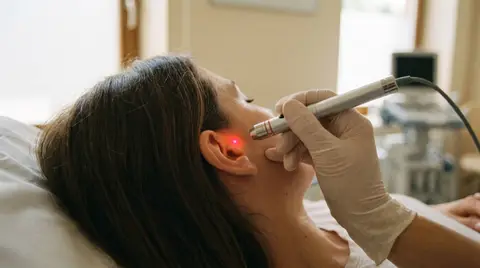
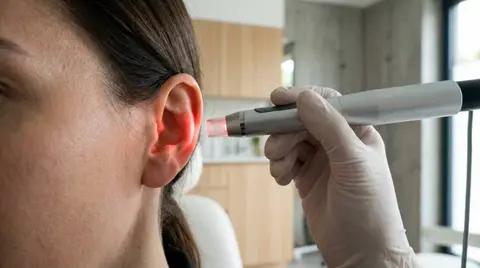
Whether you are aiming for total abstinence or a gradual reduction, auricular laser support can back up your efforts. At ABC Laser in Strasbourg, a gentle laser is applied to reflex points on the ear to help regulate the cravings linked to drinking.
Our services fall within the field of wellbeing and never replace medical follow-up, particularly in the case of significant dependence or an alcohol-related medical condition.
Laser can: ease cravings; make it easier to choose consciously whether or not to drink; make the first days of change more comfortable, alongside medical advice. More information: our laser aids to stop drinking. Quitting package: from 150 € per session.
Frequently asked questions
Can I start with moderation and then move on to abstinence if that is not enough?
Yes, many journeys are built in stages. Cutting down first, then considering stopping completely is common. The reverse is still possible, but after significant dependence, going back to moderation carries a high risk of relapse.
How do I know if my drinking requires medical follow-up first?
You must consult a doctor or a specialist service if you drink every day, if you have already had withdrawal symptoms (shaking, sweating) or if your health has been affected by alcohol; stopping abruptly without supervision can be dangerous.
Is harm reduction a form of laxity?
No. The priority remains to do no harm. Allowing more moderate consumption can engage people who would not have accepted the demand for total abstinence straight away.
Is laser enough to treat alcoholism?
No. Laser does not cure addiction; it is a complementary aid to reduce cravings and support motivation. Medical and psychosocial support remains the priority.
I live in the Bas-Rhin; can I benefit from the sessions offered in Strasbourg?
Yes, many people from the département travel to Strasbourg for these sessions, which can fit into a care pathway that includes your usual healthcare providers and local services.

In summary
Choosing between abstinence and moderation in the Bas-Rhin is not just a question of willpower. It means taking into account your level of dependence, your health, your environment and your life goals. Moderation suits people with little dependence or who are in the process of becoming aware; abstinence remains the safest path in the case of established disorders or repeated failed attempts to cut down.
You do not have to move forward alone: local services, doctors and complementary approaches such as laser are there to support you. To go further, see: laser quitting services for addictions.