Managing everyday pressure without lighting a cigarette is not only possible, but more accessible than you might think. By favouring gentle, long-lasting approaches, we help you defuse peaks of tension, regain deep breathing and establish inner calm — without compensation or guilt.
In this article, we offer you simple and effective guidelines for building lasting serenity: breathing techniques, grounding rituals, measured movement and listening to your body's signals. The aim is to replace the automatic reflex of smoking with robust resources that respect your pace, and to support you kindly towards a balance that holds over time.
Why stress makes you want to smoke and how to break the association
Understanding the stress–cigarette reflex
Under tension, the brain looks for a quick way out. The cigarette long played this role because it offered a defined break, a repetitive gesture and a particular way of breathing. Little by little, stress becomes the “signal” and the cigarette the “response”. The key is to reintroduce a choice between the two. Creating a space between the signal and the response is already taking back control. We help you recognise these mechanisms so that each peak of pressure becomes an opportunity to refocus, without unnecessary judgement.
Simple levers to break the reflex
Replacing the automatic reflex with a chosen ritual requires clarity and simplicity. The aim is to calm the nervous system quickly while sending the body a message of safety. Here are some concrete ideas, easy to integrate into everyday life:
- Name what is happening: “I can feel the tension rising”, then breathe in through your nose and lengthen the out-breath; two cycles are often enough to bring the impulse down.
- Keep your hands busy with intention: hold a bottle of lukewarm water, gently massage your palm, smooth your forearm; touch soothes and replaces the gesture of smoking.
- Ground your body: feet firmly on the floor, shoulders heavy, jaw relaxed; a few seconds of grounding restore stability.
- Give yourself a delay: allow yourself 3 minutes before any decision; during this time, walk or look into the distance to release visual pressure.
- Change your sensory setting: open a window, take a sip of water, smell a pleasant scent; a sensory “reset” breaks the association.
- Talk to yourself kindly: “I am going through a wave, it will pass”; your inner language directly influences the tension you feel.
Concrete examples
| Stressful trigger | What the brain expects | Natural replacement response |
| --- | --- | --- |
| Difficult phone call | An immediate break | 2 long out-breaths through the mouth, hands flat on the table, resource phrase: “I am handling it step by step.” |
| Traffic jam | Repetitive gesture to let off steam | Self-massage with the thumb in the palm, gaze widened towards the horizon, soft music at low volume |
| Urgent late email | A clean break | A minute standing up: back stretch, 6 calm breaths, a sip of lukewarm water |
| Solitary end of the day | Feeling of being held | Blanket over the shoulders, herbal tea, warmer lighting, 5 slow, mindful steps |
| Coffee break with colleagues | Social ritual | Glass of sparkling water, hold the cup with both hands, ask an open question to shift attention |
| Conflict or misunderstanding | Release of tension | Short in-breath, long out-breath 2:1, shoulders relaxed, write down the facts before replying |
We remain by your side to adapt these guidelines to your reality. By clarifying your triggers and choosing rituals that suit you, you anchor soothing, lasting and truly liberating reflexes.
How to manage stress without cigarettes: quick and effective techniques
60-second micro-rituals
When the pressure rises, opt for a short, precise sequence: gently straighten your back, relax your jaw, let your tongue rest on the roof of your mouth, then soften your gaze as if you were looking at the horizon. Breathe in discreetly through your nose, breathe out through your mouth, letting the air escape like a light mist on a window, and accompany this out-breath with a chosen resource phrase: “One thing at a time.” In one minute, you send the nervous system a clear signal of safety — without trying to “perform”, just coming back to the essentials.
Another express option: dispel tension through the right movement. Sit in a stable position, roll your shoulders back twice, stretch your neck as if lengthening the nape, then slide your thumb into the opposite palm and massage in slow circles for 20 seconds; finish with an out-breath through pursed lips, longer than the in-breath, and a sip of lukewarm water. This simple sequence calms the body and naturally replaces the need for an automatic gesture.
In a rush
When everything speeds up, the “3C protocol” helps you stay in control. First, observe the moment as it is (“It is noisy, my heart is beating faster”), without judgement. Then choose a clear, measurable micro-action (two lengthened out-breaths, three slow stretches, a soothing phrase). Finally, reinforce the decision with something concrete: place your feet on the floor, sit with your back supported, or look out of the window for a few seconds. This triple movement creates a clean break from the impulse to smoke and brings a return to calm, even in the middle of an emergency.
Setting up supports throughout the day
Stress management becomes smoother when guidelines are put in place beforehand. Attach small rituals to your transitions: when you open your computer, a silent breath; before an important call, three seconds of grounding through the pelvis; at the end of a task, relaxing your shoulders. Schedule these micro-breaks in your diary as real appointments with yourself: step by step, you replace the old habit with chosen, elegant and effective gestures that support your balance throughout the day.
How to manage stress without cigarettes in the long term: natural habits
Anchoring routines that last
In the long term, the key is calm regularity. Set three stable anchor points in the day: a peaceful wake-up with smooth breathing and a glass of lukewarm water, a short time outdoors in the middle of the day to widen your gaze and restore energy, then slowing down in the evening with longer out-breaths and softer lighting. These recurring guidelines give structure to the nervous system, reduce jolts and make the old automatic reflex unnecessary. What matters is not intensity, but continuity: a simple gesture repeated every day becomes a protective reflex.
Arranging your environment and your energy
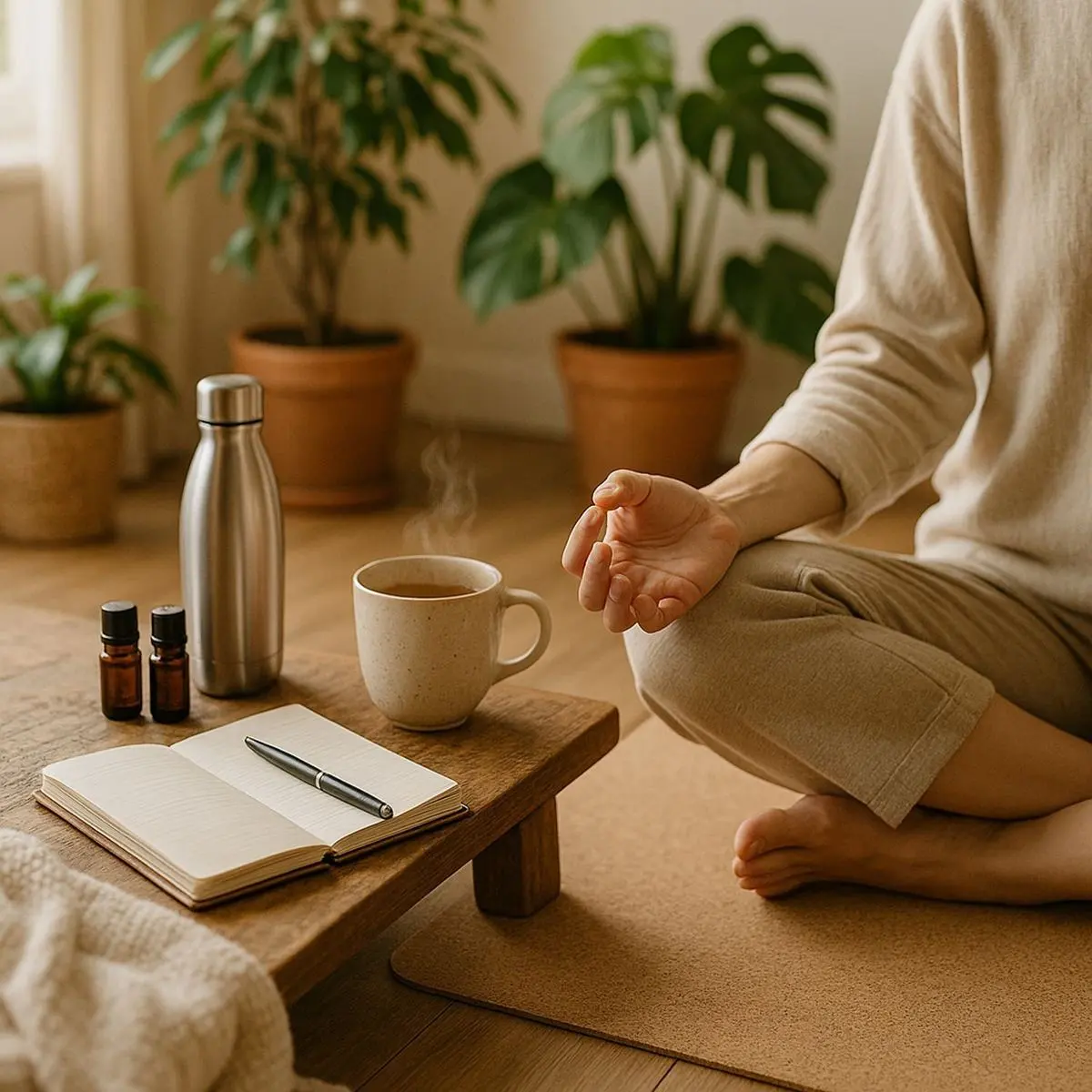
Your living space can become a soothing ally. Set up the space for relaxation: warm lighting at the end of the day, comforting scents, a welcoming armchair for your breaks, a bottle of water within reach. Gradually removing objects associated with smoking frees up your field of vision and breaks unconscious reminders. Add a grounding object that is pleasant to the touch to keep your hands busy when your mind races; pair this cue with a few prolonged out-breaths and a short phrase, like a discreet thread that brings you back to yourself.
Plan a 5-minute airlock during busier periods: one minute to decompress through breathing, one minute of gentle movement to loosen the shoulders, a sip of water to mark the break, a quick clarification of the two priorities of the moment, then a kind inner word. This appointment with yourself acts like a parachute: it slows the fall and gives you back some height.
Finally, cultivate gentle self-monitoring. In the evening, note in a few words what supported you and what you would like to adjust the next day. This light attention fuels progress, not perfection, and turns each day into calm practice. If a stronger wave comes, see it as information rather than a failure: we adjust your guidelines together, so that calm becomes a lasting skill, anchored in your reality.
Managing cravings and preventing relapses: a gradual action plan
Anticipating and getting through the craving
A craving to smoke is like a wave: it rises, reaches a peak, then subsides. To get through it with confidence, prepare an “anti-craving passport” before it arises. Identify the sensitive moments of your day, spot the bodily signals that announce the pressure (dry mouth, restless hands, a fixed stare), then decide on a trio of unchanging guidelines: a reference breath, a grounding gesture and a comforting drink. On the day itself, open a 180-second window: gently lengthen your out-breath, let your shoulders grow heavy, hold your cup or bottle with both hands, and direct your attention to a pleasant detail of your surroundings. This combination sends the body a message of safety and replaces the automatic reflex with a chosen, elegant and effective response.
Preventing relapses and managing a lapse
Over time, prevention depends on regularly maintaining your supports. A brief weekly check-in is enough: revisit your triggers, confirm what worked well, adjust one element if necessary (break time, desk layout, resource phrase). Slip a small “calm kit” into your bag — water, herbal tea or a sugar-free lozenge, a pleasant grounding object — so that you have something within reach to nourish calm when tension rises. In the event of a lapse, first neutralise self-judgement: it is information, not a definition. Briefly note the context, return to a long out-breath, drink a few sips of water, then resume your routine within the hour. This quick return to the plan avoids the domino effect and puts you back on track. You move forward through successive adjustments, step by step, until calm becomes a reliable reflex, naturally anchored in your daily life.
In conclusion, managing stress without cigarettes means relearning a calm and effective presence, at the right pace, so that each day gains in fluidity and clarity. We are by your side to turn these guidelines into stable reflexes, adjusted to your reality, with personalised, caring and structured support. If you would like to consolidate this course and benefit from professional support that combines ease of application and continuity, we invite you to take the plunge today: let us discuss your situation, plan a first step and lay solid foundations together for what comes next. For a concrete, supervised start, discover our Formule Initiale, designed to offer you a clear framework and attentive follow-up. Contact us now to book your support and give yourself what really matters: freer breathing, a calmer mind and the satisfaction of moving forward with tools that last over time; we put our expertise at the service of your freedom, so that serenity becomes, day after day, your new normal.