After a busy day, many of us find ourselves facing the same scenario in the evening: the meal is over, fatigue sets in and suddenly the box of biscuits or the bar of chocolate becomes impossible to ignore. These night-time eating compulsions give the impression of losing control; guilt quickly sets in. If you have ever thought “I know I am not hungry but I cannot stop”, you are not alone. The good news: there are concrete levers to change this pattern. Among them, a still little-known approach – the laser protocol – can help calm the nervous system and break the automatic habit of evening snacking.
Snacking and evening binge eating: regaining control with the laser protocol
Reading time: ~10 min
Contents
- Understanding evening eating compulsions
- Why is the evening critical?
- The laser protocol
- Formule Équilibre
- What is going on in your head
- Practical advice
- Mini FAQ
Understanding evening eating compulsions from the perspective of behavioural psychology
Evening eating compulsions are not a matter of lack of willpower; they result above all from psychological and neurological mechanisms triggered at the end of the day. From a behavioural point of view, night-time snacking is a learned behaviour that is then reinforced over time.
The same pattern is often found:
- Emotional or contextual trigger (stress, family tensions, loneliness, fatigue, screen or TV series)
- Intense cravings for comfort food (cravings)
- Acting on it quickly, often on “autopilot”
- Temporary relief, then guilt and a promise to “do better” the next day
Your brain then associates the sequence “evening + comfort food” with a moment of unwinding; dopamine creates a reward loop that reinforces the habit. These compulsions can be part of broader disorders (binge eating disorder, compulsive night-time snacking). If episodes are frequent, consult a health professional for a possible diagnosis.
Why the evening is a critical time for snacking and eating disorders
In the evening, our self-control resources are at their lowest; all day long, you have made decisions, managed constraints and resisted small cravings. Several factors combine:
Decision fatigue: your ability to say no wears away. Accumulated stress: a need for a quick reward, often through sugar. Unexpressed emotions: they resurface once calm has returned. A facilitating context: screen, sofa and an accessible kitchen encourage compulsion.
The evening then becomes synonymous with letting go around food; it is not about real hunger but a need for soothing or consolation – this is emotional eating. The aim is not to remove all pleasure but to come off autopilot; the laser protocol can contribute to this.
The laser protocol: an aid to calm the nervous system and evening urges
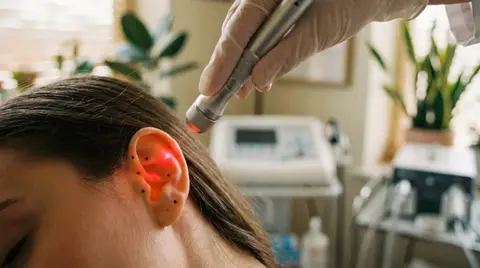
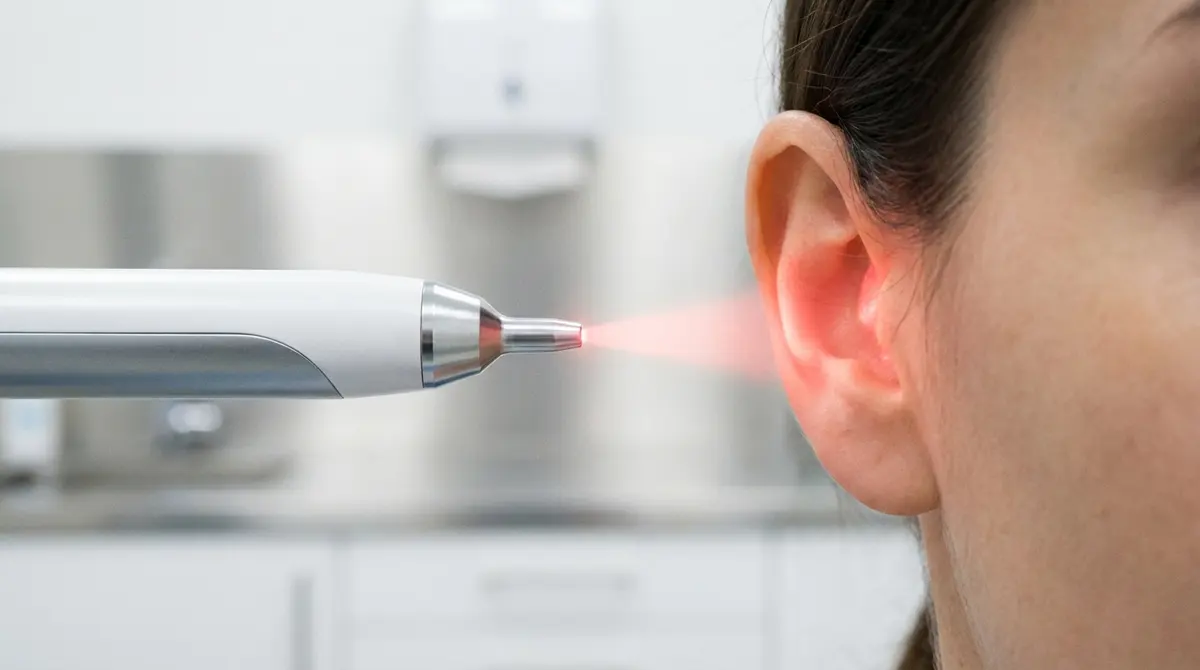
Used in auricular reflexology, the protocol is based on a cold laser applied to precise points on the ear connected by reflex pathways to the brain and the autonomic nervous system.
Easing cravings
The stimulation targets points linked to appetite, metabolism and dependence; it aims to reduce urgent cravings for sweet or savoury foods in the evening.
Calming emotional triggers
Zones associated with stress and anxiety are also treated; the nervous system calms down, thereby reducing the end-of-day tension behind many urges.
Rebalancing internal signals
Practitioners report a better balance of neurotransmitters (including dopamine) and regulation of hunger/satiety sensations, making more intuitive eating easier.
A session lasts 45 min to 1 h, and is painless and non-invasive. Many people notice a significant reduction in urges from the very first session. This approach remains complementary: it does not replace medical advice, and large-scale academic studies are still lacking.
Formule Équilibre: breaking the cycle of night-time snacking
At ABC Laser, the Formule Équilibre specifically targets evening eating compulsions and sugar-related problems. It combines two laser protocol sessions at least 2 months apart (€190 for both). Details: ABC Laser Formule Équilibre.
First appointment
Understanding your habits, explanation of cravings, first laser stimulation and setting up simple behavioural strategies (for example, replacing the “sofa + biscuits” ritual with a non-food treat).

Second appointment (min. 2 months later)
Feedback on your experience, adjustment of the stimulated points, reinforcement of the new automatic behaviours and tools to consolidate the change.
Goals: to quickly reduce the intensity of cravings, regain a sense of control without permanent restriction and establish a calmer relationship with food and with the evening. The support also takes into account sleep, stress and weight expectations (more information: dedicated page).
What is going on in your head in the evening and how the laser can help
The laser protocol creates a “window of availability”: cravings are less overwhelming, the nervous system is calmer. In this state, it becomes easier to apply behavioural tools: postponing a craving, changing activity, taking out a portion rather than the whole packet.
Practical advice for regaining control right now
Organising your evenings to reduce snacking
Name the emotion before opening the cupboard: ask yourself whether it is physical or emotional hunger (stress, boredom, loneliness…). Putting a word to the feeling already creates some distance.
Prepare the evening in advance: plan a break when you get home (breathing, a shower, music) and, if necessary, a balanced snack so that you do not arrive at dinner starving.
Change just one element of your ritual: for example, have an unsweetened hot drink before deciding whether you are still hungry, or settle in another room as soon as the meal is over. Put food out of sight: store problem foods up high or in a less accessible cupboard; your environment supports the internal work of the laser.
Seek help if needed: if episodes are frequent, talk to an eating disorder professional; the laser can complement nutritional or psychological follow-up.
Mini FAQ on evening eating compulsions and the laser protocol
Does the laser protocol cure eating disorders?
No; it acts as support to reduce cravings and calm the nervous system. It does not replace medical follow-up in the event of a severe disorder.
Do the sessions hurt?
The laser is cold and applied to the ear; the sessions are described as painless and relaxing.
How many sessions are needed?
Effects are often felt from the very first session. For lasting change, 1 session may be enough (the Formule Équilibre includes 2, depending on each person's needs).
Will I lose weight?
When snacking decreases, gradual weight loss (2-5 kg/month) is often observed, in the context of a balanced lifestyle.
Are there any side effects?
Centres report good tolerance, with no notable side effects. However, do mention your medical history during the initial assessment.
Regaining control of your evenings does not mean giving up pleasure, but breaking out of the “stress → snacking → guilt” cycle. By acting on the nervous system and on your habits, the Formule Équilibre offers a structured framework to calm night-time compulsions and restore a calm relationship with food. To go further: discover our personalised packages.

Summary: living better with evening eating compulsions
Understanding the mechanisms of evening eating compulsions, identifying emotional triggers and acting on the nervous system with the laser protocol make it possible to gradually come off autopilot. By combining this support with concrete adjustments to your routines, you create an environment more conducive to peaceful evenings.
Without aiming for perfection or permanent restriction, the goal is to regain a sense of control, ease your relationship with food and turn the evening into a real time of recovery rather than a source of guilt.