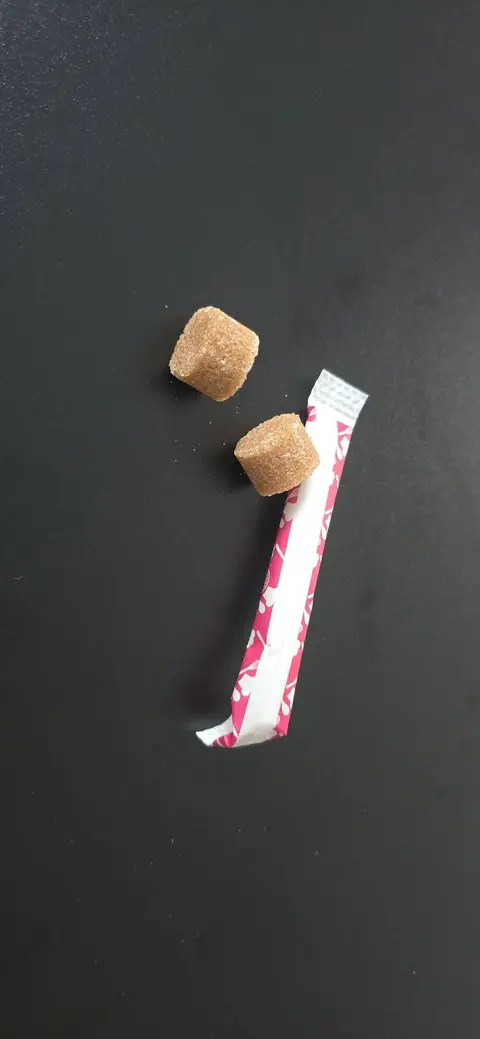
Chocolate after a meal, biscuits in the afternoon, pastries, sugary drinks or snacking in front of the television: sugar cravings can gradually become real automatic habits.
Perhaps you have already tried to cut down. For a few days, everything goes well… then the craving comes back. A stressful day, a moment of tiredness or simply the usual time for an afternoon snack is sometimes enough to fall back into the same habits.
And the most frustrating thing is often knowing exactly what you would like to change without managing to maintain that change over time.
This is the approach behind the support offered at ABC Laser Strasbourg: a personalised assessment combined with auricular stimulation using gentle laser, to support you when you decide to take back control of your sugar cravings, your hunger pangs or your snacking.
How does anti-sugar laser work? What can you expect from it? How does a session unfold? What do the reviews say? Here are the answers to the main questions before making an appointment.
Anti-sugar laser: reviews, how it works and support for sugar cravings
Reading time: ~10 min
Contents
- Anti-sugar laser: what are we talking about?
- Why are sugar cravings sometimes so difficult to control?
- Sugar addiction: what does this expression really mean?
- How does a laser session for sugar unfold?
- Sugar addiction laser: what do the reviews say?
- Laser, cravings and snacking: what goals?
- Have you already tried several times to stop sugar?
- What can you feel when you sharply reduce sugar?
- Do you really need to cut out all sugar?
- How can you make change easier after the session?
- Formule ÉQUILIBRE at ABC Laser Strasbourg
- FAQ: anti-sugar laser
Anti-sugar laser: what are we talking about?
The term “anti-sugar laser” is commonly used to refer to a method of stimulating various points on the ear using a low-power laser.
At ABC Laser Strasbourg, this method is part of a laser auricular reflexology approach. The stimulation is external, needle-free, and carried out on various auricular points selected as part of the protocol.
But our support does not simply consist of carrying out laser stimulation for a few minutes.
Before the session, we review your relationship with sugar and your eating habits: what you consume, the times when cravings appear, the foods you find hardest to resist and the situations that encourage snacking.
Because your difficulty may not be “sugar” in general.
It may be chocolate in the evening, biscuits in the afternoon, pastries at the weekend, sugary drinks, a need to finish every meal with something sweet or snacking triggered by stress.
Your support must therefore start from the way you function.
The aim is to make the session a real starting point for your change, rather than yet another attempt started alone on a Monday morning and abandoned a few days later.
Why are sugar cravings sometimes so difficult to control?
Because a sugar craving is not always simply linked to hunger.
Imagine someone who has eaten chocolate almost every evening in front of the television for several years.
At 21 h, they are not necessarily hungry. Yet the sofa, the television and the end of the meal have gradually become associated with this moment of pleasure.
Another person will feel the craving mainly around 16 h.
Yet another will open the cupboard when coming home from a particularly stressful day.
Several mechanisms can thus overlap:
- real hunger;
- the craving for a specific food without real hunger;
- a daily habit;
- snacking between meals;
- stress or emotions;
- the environment: available food, television, work breaks, family habits;
- seeking a moment of pleasure or comfort.
That is why simply telling yourself “I have to stop” is not always enough.
To change a habit for good, it is often useful to identify precisely what triggers the craving.
Sugar addiction: what does this expression really mean?
Many people search the Internet for “sugar addiction”, “sugar dependency” or “sugar addiction laser reviews”.
These expressions often reflect a very concrete feeling:
“I know I would like to cut down, but I find it hard to resist when the craving comes.”
Medically speaking, however, a strong attraction to sweet foods is not enough to diagnose an addiction.
In everyday life, this feeling of dependency can correspond to several phenomena: deeply established habits, emotional eating, seeking pleasure, the food environment or repeating behaviours that have become almost automatic.
At ABC Laser, we therefore prefer not to systematically put a label on your behaviour.
Instead, we try to understand:
- which foods attract you the most;
- how often you consume them;
- at what times the cravings appear;
- whether you snack between meals;
- whether certain emotions trigger the craving;
- and above all what you really want to change.
How does a laser session for sugar unfold?
Your appointment begins with a personalised assessment.
This is an important step because two people making an appointment to “stop sugar” may in reality have completely different habits.
Your goal may be to:
- sharply reduce chocolate;
- cut down on pastries and biscuits;
- limit snacking;
- better manage hunger pangs;
- reduce certain sugary drinks;
- break out of the “dessert is a must” reflex;
- work on food cravings associated with stress;
- return to a more structured way of eating.
Once your goal has been identified, we carry out the stimulation of various auricular points using a low-power laser.
The technique is external and does not require needles.
The session is also an opportunity to think about the situations likely to bring you straight back to your old habits.
The idea is therefore not to impose yet another diet on you.
Rather, it is about supporting you at the moment you have decided to change your habits and making this appointment a real break with your previous automatic habits.
Sugar addiction laser: what do the reviews say?
Before making an appointment, it is natural to look for reviews of anti-sugar laser.
The queries “sugar addiction laser reviews”, “anti-sugar laser reviews”, “sugar laser reviews” or “stop sugar laser reviews” are in fact among the searches made by Internet users interested in this method.
Why? Because they generally want to know what you feel after the session and above all whether other people facing the same difficulties have managed to change their habits.
Experiences are necessarily individual, but certain types of situation come up regularly when people talk about their relationship with sugar.
Experiences that differ from person to person
“My problem was mainly chocolate in the evening. Having started this process helped me break that habit and better identify the moments when the craving came back.”
“I snacked a lot between 16 h and dinner. My goal was not to go on a diet, but to return to a more structured way of eating.”
“I mainly had sugar cravings when I was stressed. For me, the session marked the beginning of a change in my habits.”
“I wanted to cut down on biscuits and sugary products without falling into an overly restrictive diet. I appreciated that the support was adapted to this goal.”
These testimonials are illustrative examples of situations and feelings that may be encountered. They do not correspond to individual Google reviews and do not constitute a guarantee of results.
Each person indeed arrives with their own history, habits and level of motivation.
What matters most is to make the most of the session to create a real change of dynamic.
Laser, cravings and snacking: what goals?
The term “sugar” can hide several behaviours.
You may consume a lot of sugary products without really snacking: fizzy drinks, very sweet coffees, desserts at every meal or frequent pastries.
Conversely, your diet at mealtimes may be relatively balanced while you have many small snacks between meals.
The first goal is therefore to identify your main difficulty.
For some people, reducing a single very present habit can already change daily life considerably.
For example:
3 biscuits every afternoon add up to more than 1,000 biscuits over a year.
A behaviour that seems harmless when observed over a single day can therefore take up a considerable place when it is repeated over several months or several years.
The process does not need to be perfect from day one.
Above all, it must be clear enough for you to know what you have decided to change.
Have you already tried several times to stop sugar?
This is probably one of the most common situations.
You already know the advice.
You know that you could eat fewer biscuits, cut down on pastries or stop buying certain sweets.
The problem is therefore not necessarily a lack of information.
You know what you want to change, but you find it hard to turn that decision into a new habit.
This is precisely where making an appointment can make sense.
You set a date.
You clearly define your goal.
You have your session.
And above all, you decide that this date marks the beginning of your change.
Instead of telling yourself once again “I’ll try on Monday”, your approach becomes concrete.
What can you feel when you sharply reduce sugar?
Searches for “sugar withdrawal symptoms”, “sugar withdrawal duration” or “effects of stopping sugar” are particularly common.
Yet there is no universal timetable that is the same for everyone.
A person who used to consume several sugary products every day may, at first, mainly be confronted with their old habits.
The most difficult moment may be the one when they usually had their chocolate, their dessert or their biscuits.
It is precisely for this reason that it is useful to anticipate these moments.
Rather than waiting for the craving to arrive before thinking about what you are going to do, you can identify your main risk situations in advance.
As tiredness, headaches or irritability can have many causes, you should not, however, automatically attribute every symptom to “sugar withdrawal”.
Do you really need to cut out all sugar?
No.
Reducing very sugary products does not mean removing all carbohydrates from your diet.
Fruit, some vegetables and dairy products naturally contain various sugars. Starchy foods, for their part, mainly provide complex carbohydrates.
The goal may rather be to reduce the place taken up by certain very sugary products or those containing added or free sugars: sugary drinks, sweets, pastries, biscuits or certain processed foods.
The World Health Organization recommends, in particular, limiting free sugars to less than 10 % of daily energy intake.
It is therefore perfectly possible to aim to sharply reduce sugary products without adopting a logic of permanent food bans.
How can you make change easier after the session?
Your environment can play an important role in the days following your decision.
A few simple reflexes can make your efforts easier:
- identify your most difficult times of day;
- avoid keeping large quantities of the foods you find hard to resist;
- drink mainly water;
- keep sufficiently structured meals;
- avoid turning cutting down on sugar into an extremely restrictive diet;
- spot the situations in which you eat automatically;
- change certain rituals associated with snacking.
You can also note down for a few days the moments when a craving appears.
Simply ask yourself:
Am I really hungry? What has just happened? And what exactly am I looking for at this moment?
This observation can help you understand your own triggers much more easily.
Formule ÉQUILIBRE: your support at ABC Laser Strasbourg
The Formule ÉQUILIBRE was designed to support people who wish to act on their sugar cravings, hunger pangs, snacking or certain repetitive eating habits.
Your appointment combines:
- a personalised assessment of your habits;
- defining your goal;
- auricular stimulation using gentle laser;
- advice adapted to the situations identified during the appointment.
You do not need to know before coming whether your difficulty relates to sugar, snacking, hunger pangs or emotional eating.
That is precisely what we review together during your appointment.
Your goal may be very specific: no longer snacking in the evening, cutting down on chocolate, eating fewer biscuits or simply regaining more control when the craving appears.
And you do not need to wait for the “perfect moment” to start.
If you have already decided that sugar and snacking take up too much space in your daily life, your session can become the concrete starting point of your change.
→ Book an appointment at ABC Laser Strasbourg
FAQ – Anti-sugar laser, cravings and snacking
Why have a laser session for sugar?
The session is aimed in particular at people who have decided to change their habits but regularly encounter the same sugar cravings, hunger pangs or snacking. At ABC Laser, it combines a personalised assessment and auricular stimulation using gentle laser in order to support this process of change.
How does anti-sugar laser work?
Various points on the ear are stimulated with a low-power laser. At ABC Laser, this stimulation is part of broader support that includes a conversation about your habits and your goal.
Can laser help with chocolate cravings?
Chocolate cravings are among the reasons that may lead someone to come for the Formule ÉQUILIBRE. The goal is then defined precisely during the assessment so that the support matches your real habits.
Can laser support snacking?
Yes, the support can be focused on snacking habits. The assessment makes it possible in particular to identify the times, the foods concerned and the situations that most often trigger this eating.
How long does it take to lose the sugar habit?
There is no duration that is the same for everyone. A habit established for several years may require more attention than a recent behaviour. What matters most is identifying the moments when your old habits are likely to reappear.
Do you have to stop all sugars after the session?
No. Reducing very sugary products does not mean cutting out fruit, starchy foods or all carbohydrates. The goal is defined according to your consumption and your habits.
Does anti-sugar laser make you lose weight?
Auricular stimulation is not presented as a method that directly causes weight loss. Weight depends on many factors. The Formule ÉQUILIBRE focuses on the cravings, snacking and eating habits defined with the person.
What are the reviews of anti-sugar laser?
Experiences are individual. Some people may describe a change in their relationship with cravings or with certain habits after starting their process, while others may feel differently. That is why the support is personalised and no individual result can be guaranteed.
I do not know whether my problem comes from sugar or from snacking: can I still make an appointment?
Yes. You do not need to have identified the exact origin of your habits on your own before coming. The assessment carried out at the start of the appointment serves precisely to review your consumption and define your goal.
Where can I have an anti-sugar laser session in Strasbourg?
ABC Laser Strasbourg offers the Formule ÉQUILIBRE to support sugar cravings, hunger pangs, snacking and certain eating habits. Sessions are carried out by appointment at the ABC Laser centre in Strasbourg.
→ I’ll book an appointment to start my process
Laser auricular reflexology is offered as a complementary wellbeing approach. It is not a validated medical treatment for obesity, eating disorders or sugar addiction and does not replace medical, nutritional or psychological care when it is necessary. If you have diabetes, an eating disorder, a metabolic disease or a treatment requiring a specific diet, ask your health professional for advice.