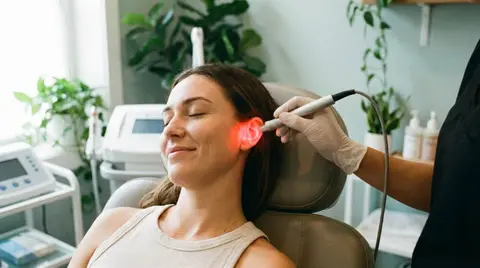
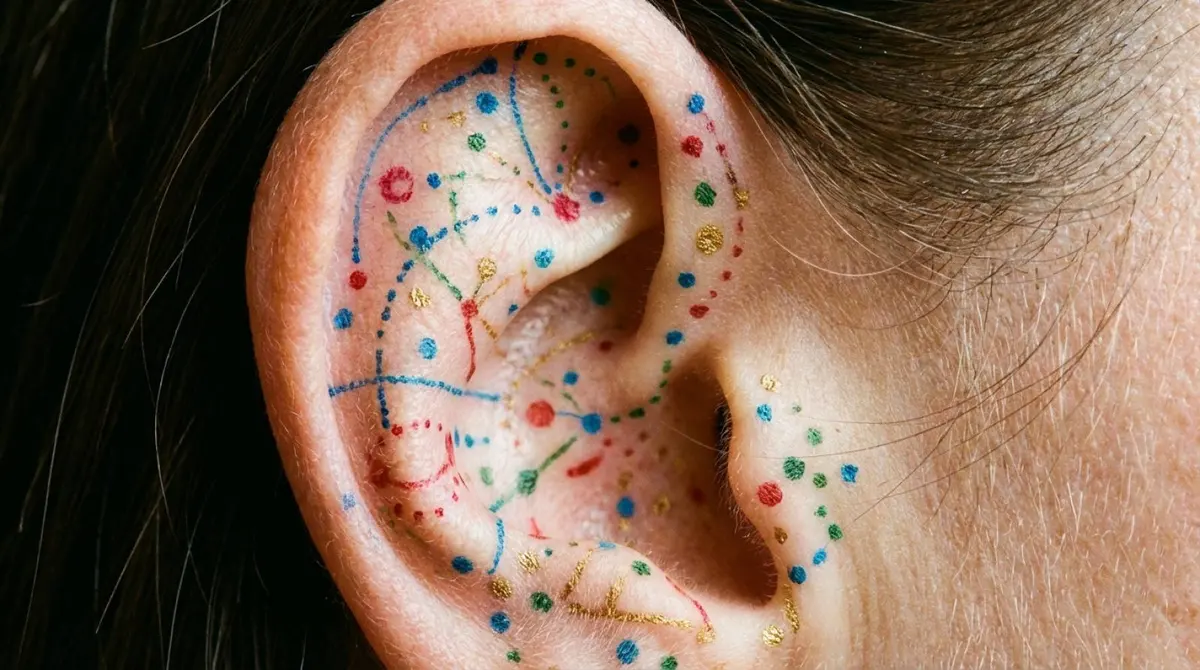
What if your addictions could be drawn on the outer ear? Auricular mapping shows that each area corresponds to an organ or to a function of the body. By stimulating precise points, auriculotherapy can help reduce cravings, ease stress and support withdrawal.
In this article, we guide you step by step through the map of auriculotherapy points for addictions, explaining in particular the use of laser stimulation. You will be able to see this map clearly as a real diagram of the addicted brain, turned into a concrete action plan for taking back control.
Mapping the Ear: Which auriculotherapy points for addictions are stimulated to overcome addictions?
Reading time: ~8 min
Contents
- Auriculotherapy applied to addictions
- The main auriculotherapy points for addictions on the ear
- Other maps and protocols used for addictions
- How these points act on the addicted brain
- Effectiveness, limits and safety of auriculotherapy for addictions
- Mini FAQ on auriculotherapy points for addictions
- In summary
Auriculotherapy applied to addictions
The principle of auriculotherapy
Auriculotherapy is a form of ear reflexology: the outer ear is considered a microsystem representing the whole body. The practitioner locates and then stimulates precise areas to act on functional problems or on addictive behaviours.
Specific goals for addictions
For addictions, three goals are targeted:
- reducing irrepressible urges (craving);
- easing withdrawal symptoms (tremors, digestive tension, irritability);
- calming the stress and anxiety that sustain dependence.
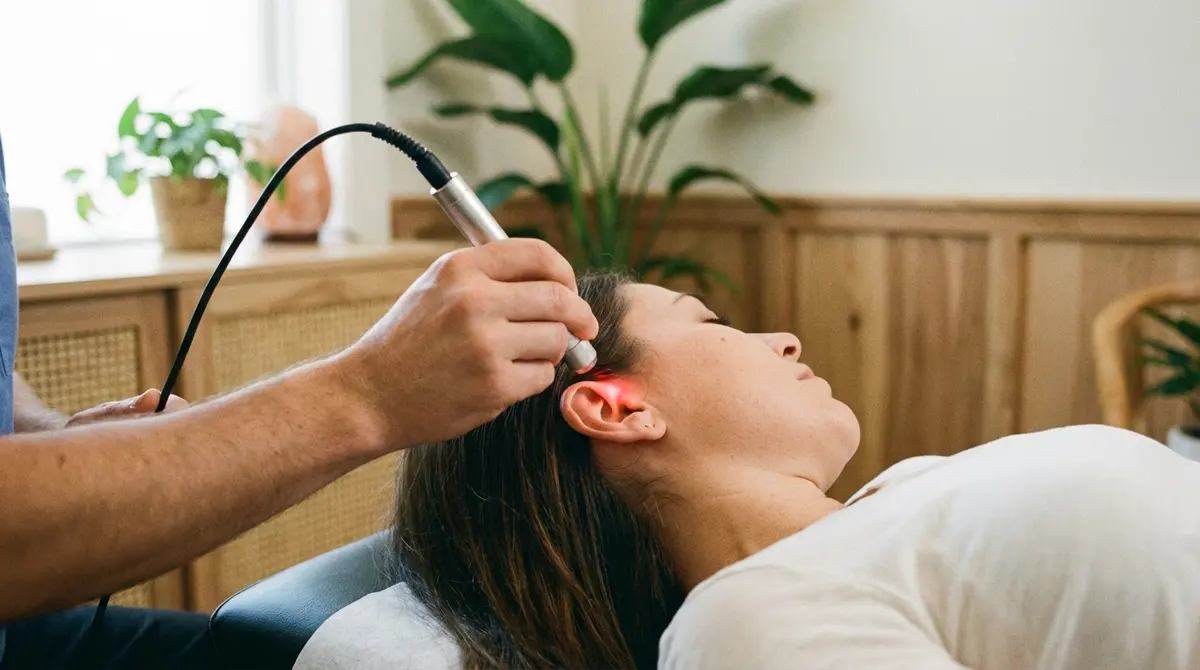
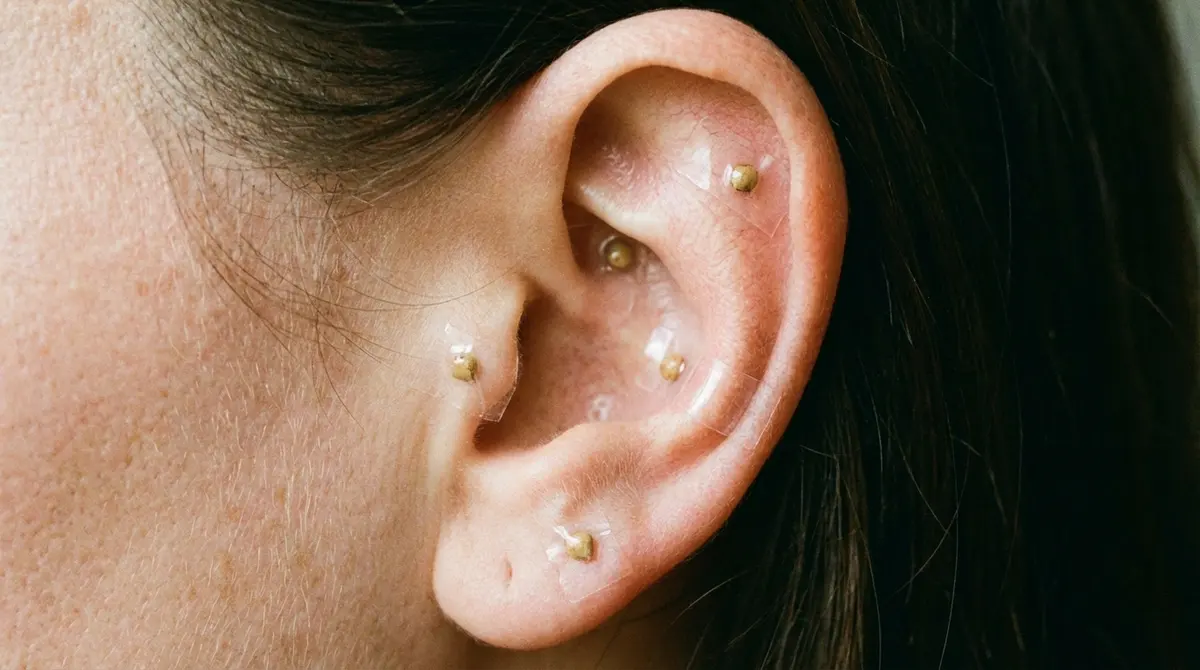
Stimulation can be done with needles, adhesive seeds, magnets or, non-invasively, with gentle laser. The latter performs photobiomodulation, which activates nerve receptors without pain or breaking the skin.
The most recognised protocols, such as the NADA protocol (tobacco, alcohol, substances), are based on a standardised map of the ear: this precision guarantees reproducible therapeutic patterns while remaining adaptable to each person’s history and type of addiction.
The main auriculotherapy points for addictions on the ear
Visualising the map of the ear
To visualise the map, imagine a foetus curled up upside down: each part corresponds to an area of the outer ear. The points linked to addictions are concentrated in the regions associated with stress management, emotions and the detoxification organs.
The five key points of the NADA protocol
The NADA protocol, used in many specialist centres, uses five key points:
These five points are often stimulated together: emotional management, support for the detoxification organs, regulation of the autonomic nervous system. With auricular laser, they are located and then stimulated by a low-intensity light beam in order to regulate the release of dopamine, endorphins and other neurotransmitters associated with pleasure and dependence.
Other maps and protocols used for addictions
Nogier’s mapping
Beyond NADA, auriculotherapy relies on more complete maps, the best known being that of Dr Paul Nogier. In this view, the ear becomes a real plan of the body with hundreds of points connected by nerve and neuroendocrine pathways.
These maps make it possible, among other things, to target hormonal and nervous rebalancing, to adapt the protocol to each substance (tobacco, alcohol, cannabis, sugar, etc.) and to work on underlying factors (sleep, anxiety, stress management, appetite regulation).
Associated methods and gentle laser
In certain situations, the CHIAPI method (specific points on the nose) is combined to strengthen withdrawal support. Gentle laser stimulation fits perfectly with these approaches: precise location of the points, a painless method well accepted by people who are sensitive to or wary of needles, targeted work whether it concerns nicotine, alcohol or other compulsive behaviours. More details: gentle auricular laser.
How these points act on the addicted brain
The link between the ear and the brain
The points are not chosen at random: the ear has a rich nerve supply connected to the central nervous system. When a reflex point is stimulated, a message is sent to the brain areas involved in managing pleasure, the stress response and the regulation of autonomic functions.

Effects on the reward circuit
In addictions, the reward circuit is overstimulated: dopamine creates an automatic craving-consumption-relief pattern. Working on the auricular map aims to reduce the intensity of sudden cravings, modulate dopamine secretion and promote a feeling of calm rather than craving.
Clinical work (see for example this systematic review) shows that protocols such as NADA reduce anxiety, improve sleep and ease certain withdrawal symptoms (alcohol, cocaine, opioids), especially when they complement overall care.
Effectiveness, limits and safety of auriculotherapy for addictions
In France, several expert reports highlight sometimes spectacular results, particularly in smoking withdrawal; the Haute Autorité de Santé also recognises the value of the method. The literature nevertheless remains heterogeneous: some studies find a significant reduction in craving, lower anxiety and improved sleep; others observe more modest effects.
The protocols are based on:
- a standardised map;
- looking for areas that are painful under pressure;
- repeated stimulation, sometimes over several sessions.
There are contraindications (pacemaker, multiple sclerosis, extensive psoriasis of the ear, etc.). Medical advice remains essential in case of doubt.
The services offered by ABC Laser are complementary well-being support. They do not constitute a medical procedure, do not replace treatment or medical advice, and in no way replace follow-up by a health professional.
To discover our approach in detail, see: our laser withdrawal services for addictions.
Mini FAQ on auriculotherapy points for addictions
Does auriculotherapy cure an addiction?
No. The points provide support to reduce cravings, stress and the discomfort of withdrawal. The best results are obtained when they are part of overall support (medical follow-up, psychotherapeutic support).
Is laser stimulation of the points painful?
No: it is non-invasive and painless. At most, you may feel slight warmth or a discreet tingling.
How many sessions are needed?
It depends on the type of addiction, how long it has existed and your emotional state. Some withdrawals can be managed in one session, others require several appointments.
Can the same points be used for tobacco, alcohol and sugar?
Yes, there is a common foundation (stress management, detoxification, emotional regulation). Specific points are then added depending on the substance concerned.
In summary
The map of the ear offers a way of reading addictive behaviours. The Shen Men, Sympathetic, Kidney, Liver and Lung points, integrated into precise protocols such as NADA and stimulated with gentle laser, help manage cravings, stress and withdrawal symptoms. To find out more about a personalised application, discover our laser withdrawal solutions for addictions.