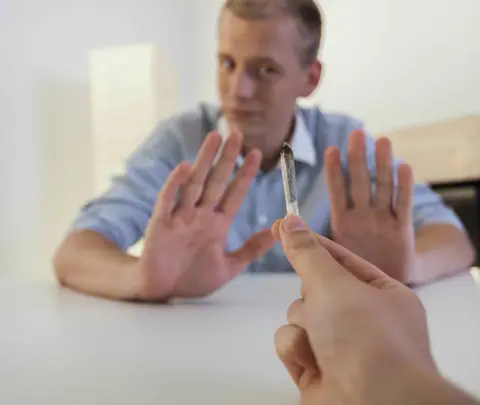
Ending long-standing cannabis use often raises two major fears: the fear of withdrawal and the fear of no longer knowing how to manage anxiety day to day. Laser cannabis withdrawal then appears as a natural avenue for easing these sensations.
This non-invasive method uses a “gentle laser” applied to specific points on the ear – and sometimes on the face – with the aim of rebalancing a nervous system that has been put under severe strain by THC. Below you will find out how it works, what actually happens during a session and what you can expect from it to get through this key stage more comfortably.
Stopping cannabis with laser cannabis withdrawal: how does it work?
Reading time: ~11 min
Contents
- Understanding laser cannabis withdrawal
- How does a session work?
- Withdrawal and anxiety: how laser helps
- How many sessions are needed?
- Advantages and limits
- Preparing well for stopping
- Frequently asked questions
Understanding laser cannabis withdrawal

The principle of laser cannabis withdrawal
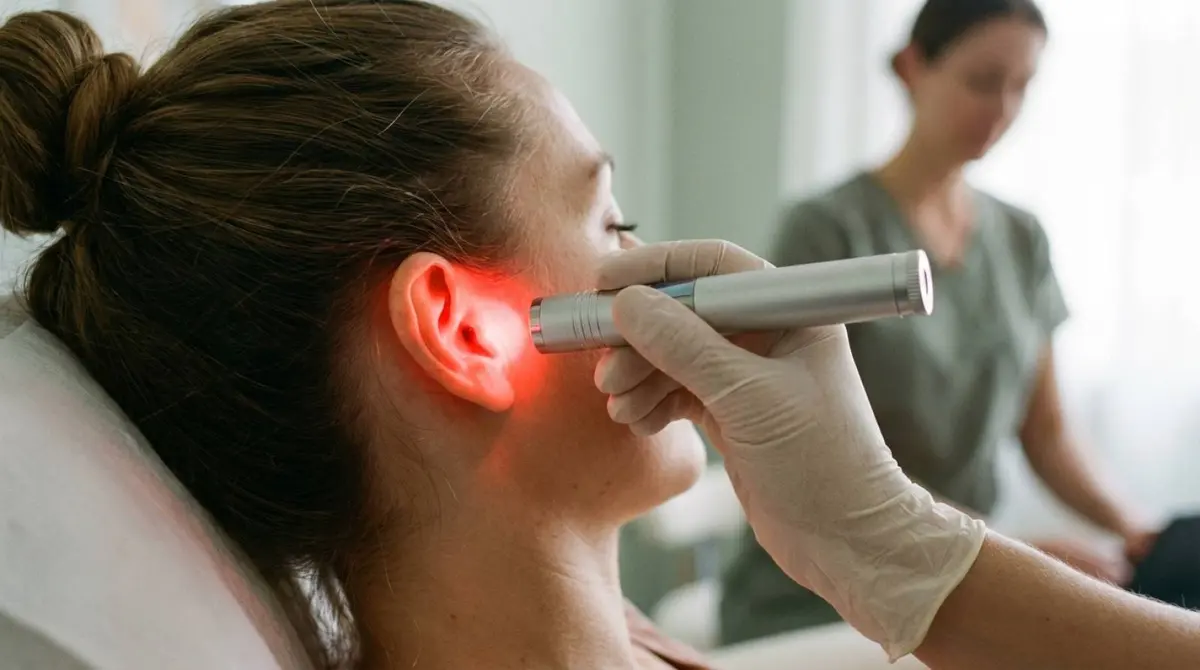
Laser cannabis withdrawal is an adaptation of auriculotherapy: instead of the needles used in acupuncture, the practitioner applies a low-intensity beam of light to reflex points, mainly located on the ear.
By stimulating these areas, the laser aims in particular to promote the release of endorphins and natural dopamine, reduce nervous tension and support the autonomic nervous system, without resorting to medication. It is an energetic and reflex approach: it reduces the physical component of withdrawal so that you stay in control more calmly.
How a laser cannabis withdrawal session works
Interview and review of your consumption
The session begins with an in-depth discussion (10 – 20 min) during which the practitioner traces your history with cannabis, identifies trigger situations, picks up on your fears about stopping and clarifies your goals. This information allows the practitioner to adapt the laser stimulation to your profile.
Detection and stimulation of reflex points
The practitioner first locates the most reactive points using a detector, then stimulates them with the gentle laser. The full session lasts on average 45 – 75 minutes, sitting or lying down, in a calm environment. The sensation is virtually painless; at most, a slight tingling or gentle warmth may be felt.
After the session: what you may feel
According to feedback, it is possible to no longer feel an immediate physical need to use, to notice an unusual sense of relaxation or to observe better sleep quality in the following days. Occasional cravings may however remain, linked mainly to habits and social context; additional support is then still relevant.
Withdrawal and anxiety: how laser can help you
Reducing withdrawal and anxiety with laser
Cannabis acts on the endocannabinoid system and the reward circuit. When you stop abruptly, this system becomes unbalanced, causing nervousness, sleep problems or anxiety. Laser stimulation is thought to promote the natural secretion of endorphins and dopamine; it would thus help to ease the feeling of physical withdrawal, reduce perceived stress, smooth out mood swings and help restore regular sleep. For deeper emotions, however, psychological follow-up is still advised.

How many laser sessions are needed?
Number of laser cannabis withdrawal sessions
Protocols vary from one centre to another: some facilities rely on a single session complemented by telephone follow-up, others provide a stopping session followed by one or two reinforcement sessions. Personal motivation and environment play a decisive role; the frequency of appointments is therefore personalised according to how your needs evolve.
Advantages and limits of laser cannabis withdrawal
The main possible benefits
- A natural approach, without medication
- A non-invasive and painless method
- Potential reduction in physical withdrawal symptoms
- Help with managing stress and anxiety
- Possible rapid improvement in sleep and energy
The limits to bear in mind
To date, no large independent study formally validates the effectiveness of laser for cannabis withdrawal; the method acts mainly on the physical dimension and does not replace work on habits or psychological follow-up. Your personal involvement remains decisive.
Preparing well for stopping cannabis with laser
Tips for preparing well for your laser session
Clarify your goal (stopping completely, gradual reduction or better-controlled occasional use), note your habits for a few days before the session, adapt your environment (get rid of your supplies, let those close to you know, avoid associated evenings out), plan anti-stress tools (breathing, walking, music, sophrology) and keep an eye on your sleep (regular hours, limited screen time, no coffee in the afternoon). These steps significantly increase the chances of success.
Frequently asked questions about laser cannabis withdrawal
Does laser cure addiction?
No. It is an aid intended to make withdrawal more comfortable; lasting change depends on your commitment and, if necessary, on therapeutic follow-up.
Will I still feel withdrawal and anxiety?
Occasional cravings may remain, but many people describe clearly reduced physical withdrawal, which makes it easier to manage mentally.
Are there any known side effects?
The lasers used are gentle and well tolerated. Nevertheless, inform the practitioner of any treatment or health problem to check that the method is suitable.
Is laser cannabis withdrawal suitable for everyone?
Yes, unless there is a medical contraindication. In cases of severe dependence, polysubstance use or psychiatric disorders, specialised medical follow-up remains the priority; laser can then be complementary support if the doctor permits it.

Conclusion: summary on laser cannabis withdrawal
Ending cannabis use is an important decision that deserves caring, structured support. Laser cannabis withdrawal does not claim to solve everything, but it can offer valuable support to ease withdrawal, reduce anxiety and regain a balanced life more quickly. To find out more, see:
our laser withdrawal solutions for addictions.