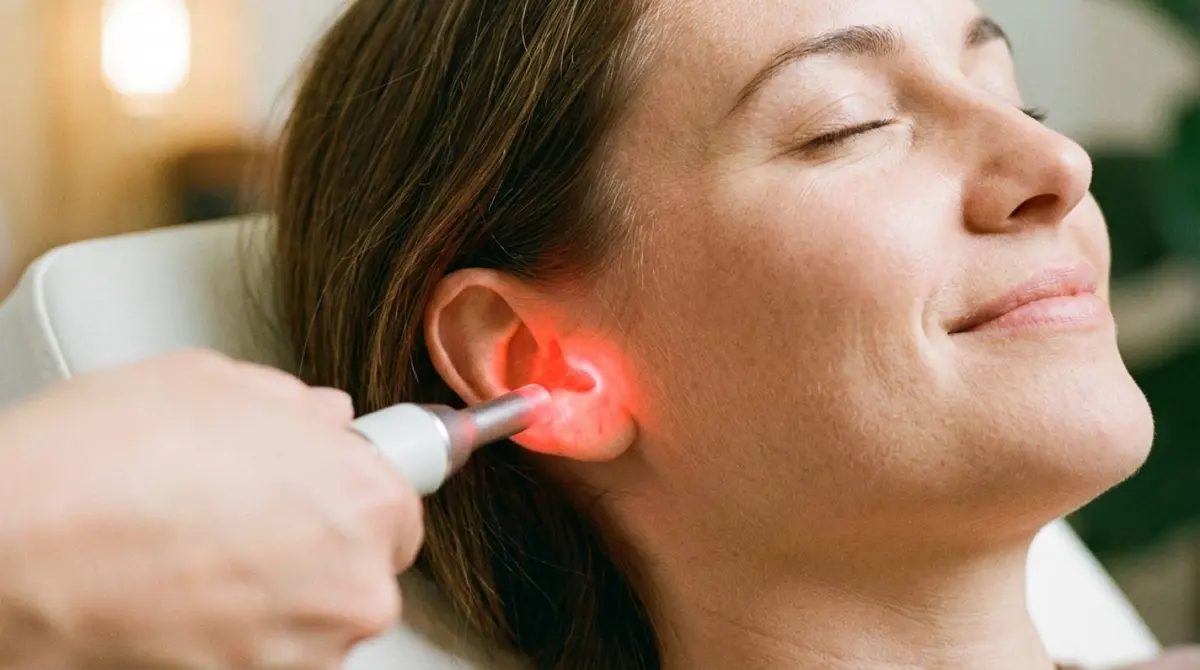
Stopping smoking is a huge change for your body and mind. Many people fear the stopping itself less than what comes with it: feelings of withdrawal, irritability, nervousness, possible weight gain. The link between quitting smoking and stress is very real and can undermine the best motivation if you are not prepared. Auricular laser therapy offers help to get through this period more calmly, by acting on the natural production of endorphins. We explain in concrete terms how this method works, what you can expect from it, its limits and the best way to integrate it into a programme for stopping smoking.
Quitting smoking and stress: managing irritability with laser.
Reading time: ~10 min
- Quitting smoking and stress: what happens in your body
- How laser acts on stress and irritability
- Preparing your laser session to cope better with quitting
- Dos and don’ts to limit stress while quitting
- Complementing laser with other validated aids
- Frequently asked questions about stress linked to quitting smoking and laser
Quitting smoking and stress: what happens in your body
When you have smoked for a long time, your brain has become used to receiving nicotine very regularly. This substance stimulates the reward circuit and alters the release of certain neurotransmitters, in particular dopamine. As a result, your body associates cigarettes with relief and relaxation, even though, in reality, tobacco maintains a background level of tension.
When you decide to stop, nicotine drops sharply. Without support, this phase can become one of the main obstacles to quitting for good, with a set of typical manifestations:
It is precisely this “stress and irritability” dimension that auricular laser seeks to support.
How laser acts on stress and irritability
The technique used in laser smoking cessation is inspired by auriculotherapy, recognised by the World Health Organization since the late 1980s for certain uses. The principle consists of applying a gentle, painless and non-invasive laser to specific points on the outer ear associated with nicotine dependence, anxiety management and the regulation of mood and appetite.
The aim is to stimulate the secretion of endorphins, “feel-good hormones” produced naturally by your body. In practice, these endorphins can ease the feeling of withdrawal, reduce inner tension, calm nervousness and limit the urge to compensate with food.
Specialist centres often report a single session of thirty to forty-five minutes with a personalised assessment, telephone support in the following weeks and a high satisfaction rate. Nevertheless, the available randomised studies have not shown clearly greater effectiveness than placebo; health authorities therefore consider laser to be a complementary aid.

The role of endorphins in stopping smoking
Your body naturally produces endorphins during physical activity, laughter or certain relaxation techniques. While quitting smoking, stimulating these hormones helps the brain to regain balance without depending on cigarettes. Auricular laser therapy aims to encourage their secretion to ease this transition; it is, however, a “helping hand”, not a magic solution.
Preparing your laser session to cope better with quitting
The more you plan ahead, the more you increase your chances of getting through quitting in good emotional conditions. Clarify your reasons for stopping and what you hope to gain in quality of life.

Talk to your doctor about your plan, especially if you have asthma, high blood pressure, heart problems or are on ongoing treatment. Choose a realistic quit date, avoiding periods that are already very stressful personally or professionally. Opt for a certified centre, using CE-marked lasers, with trained practitioners and a clear protocol. Finally, check that the centre offers genuine support (initial consultation, personalised advice, follow-up) and, if needed, consult the page dedicated to laser support for stopping smoking.
Dos and don’ts to limit stress while quitting
Do
- Setting up daily relaxation rituals (deep breathing, walking, stretching, short meditation)
- Drinking water regularly to help your body eliminate nicotine
- Warning those close to you that you may be more irritable so that they understand the situation
- Planning alternatives to cigarettes for critical moments (sugar-free chewing gum, a glass of water, going outside for fresh air)
- Getting enough sleep by going to bed at a fixed time to prevent tiredness from increasing stress
- Contacting your practitioner if anxiety becomes significant so that the support can be adjusted
Don’t
Systematically replacing each cigarette with food; constant snacking increases the risk of weight gain without dealing with the underlying stress. Multiplying sources of tension, for example by starting a major career change or building up a lack of sleep. Blaming yourself after a slip; one cigarette smoked does not mean definitive failure but reveals a point to work on. Sharply increasing your consumption of coffee or alcohol to compensate for withdrawal; these products disrupt sleep and fuel anxiety. Stopping all follow-up as soon as you feel better; stress can reappear a few weeks later, hence the value of support over time.
Complementing laser with other validated aids
Addiction specialists recommend seeing laser as one complementary tool among others. Depending on your profile, your doctor may suggest:
Combining these approaches with a laser session makes stopping safer from a medical point of view, provides concrete tools for managing emotions and strengthens the feeling of support. Many centres, including ABC Laser, point out that personal motivation and overall support remain decisive.

FAQ
Is laser enough to eliminate my stress while quitting?
No. Laser can help reduce stress and irritability, but it does not necessarily make them disappear completely. Scientific studies do not confirm systematic effectiveness; it is therefore advisable to combine this method with stress management strategies, medical follow-up and, if needed, psychological support.
How long does it take for irritability to decrease after a laser session?
Some people feel calmer as soon as they leave the session, others in the following days. For some ex-smokers, the improvement is more gradual and spread over several weeks. In any case, irritability tends to decrease naturally after a few weeks of not smoking, especially if good lifestyle habits are put in place.
Does anti-smoking laser have side effects on stress or mood?
The available feedback indicates good tolerance, with no major side effects reported. On the contrary, most clients feel relaxed. If you have mood disorders or psychiatric conditions, it is essential to talk to your doctor before undertaking this type of support.
What should I do if I relapse or if the stress comes back several weeks later?
Relapse is part of the journey for many ex-smokers. The essential thing is to analyse the situation with a professional to identify the trigger (acute stress, social situation, tiredness). Some laser centres offer personalised follow-up over a year and booster sessions if necessary. You will find other answers in the Frequently Asked Questions.
Understanding the strong link between quitting smoking and stress already helps you to be less at the mercy of your own reactions. Auricular laser stimulation offers a gentle way to encourage the production of endorphins and ease irritability and tension. By combining it with medical follow-up, validated tools and overall wellbeing support, you increase your chances of stopping smoking in calmer conditions. To find out more, discover all the solutions offered by ABC Laser.