
Deciding to stop alcohol on your own is often the first reflex when you start to question your drinking. You can already do a lot by yourself to reduce or better control your habits. But as soon as dependency sets in, trying to stop alcohol on your own can become not only very difficult, but also dangerous for your health. In this article, we help you distinguish a realistic self-managed approach from a situation that absolutely requires support. We will also see how comprehensive support (medical, psychological, family and friends) can be complemented by approaches such as laser therapy to make withdrawal more bearable day to day.
Is it possible to stop alcohol on your own? When should you get help?
Reading time: ~12 min
- Stopping alcohol on your own: what is possible and what is not
- When you should definitely not try to stop alcohol on your own
- The key steps to stop alcohol safely with help
- Dos and don’ts when you want to reduce or stop alcohol
- Mini FAQ on stopping alcohol on your own
Stopping alcohol on your own: what is possible and what is not
Before talking about withdrawal, it is essential to know what we are talking about. You do not ask yourself the same questions depending on whether you drink a glass of wine at the weekend or several glasses of spirits every day.
The difference between risky drinking and dependency
When you should definitely not try to stop alcohol on your own
Certain signs should alert you and lead you to seek medical advice rather than trying to stop abruptly by yourself.
Warning signs not to ignore
A medical check-up (blood tests, possibly a liver ultrasound, psychological assessment) is then essential to make the process safe.
Why sudden withdrawal can be dangerous
Alcohol acts as an artificial regulator of the nervous system. With heavy drinking, a sudden stop breaks this balance and can lead to severe tremors, hallucinations, seizures or delirium tremens. If such signs or a similar history are present, withdrawal must be medically supervised and, in an emergency (confusion, suicidal talk, dangerous behaviour), you must dial 15 or 112.
The key steps to stop alcohol safely with help
1. Clarify your decision
List what you actually drink, identify the situations that trigger the urge to drink, choose between cutting down and stopping completely, set a realistic date and tell one or two people you trust.
2. Consult a health professional
GP or addiction specialist: risk assessment, decision on withdrawal at home or in hospital, possible medication (acamprosate, naltrexone) and monitoring of the effects of alcohol on your organs.
3. Rely on those around you and on self-help groups
Telling your loved ones, temporarily avoiding highly tempting contexts and joining a support group significantly increase the chances of lasting success.

4. Work on the underlying issues with therapy
Cognitive behavioural therapies help you identify automatic thoughts, manage stress and emotions, and build a new balance in life where alcohol becomes less necessary.
5. Complementary support including laser therapy
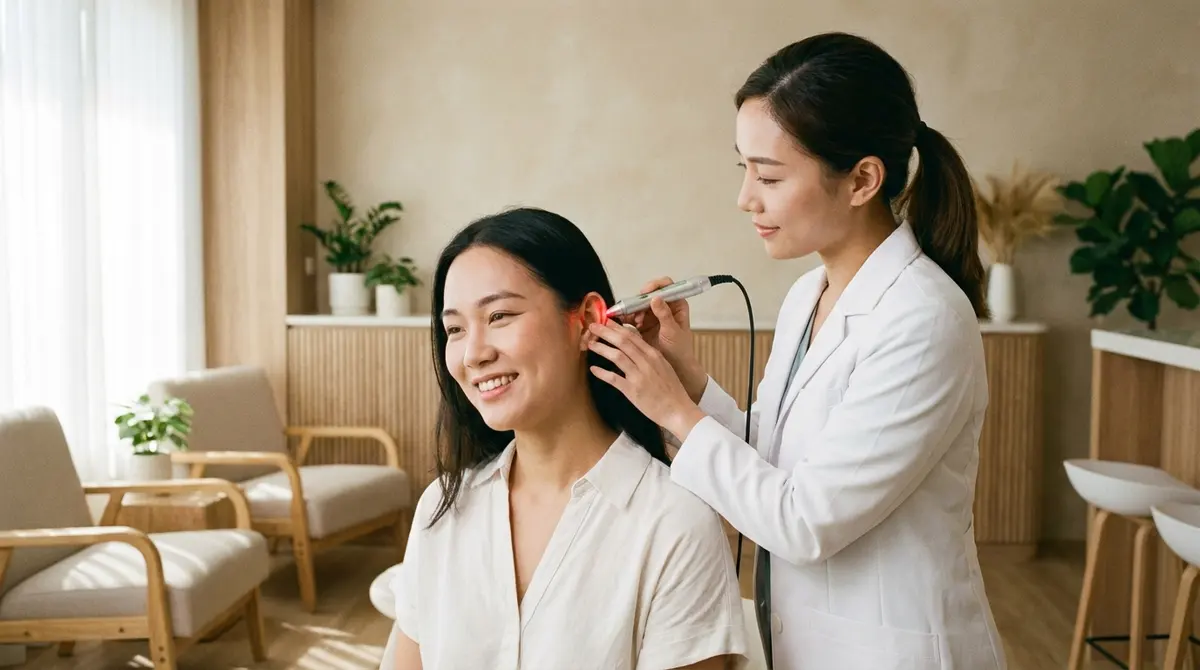
The auricular laser stimulation offered by ABC Laser is inspired by ear reflexology to promote relaxation and reduce the tension linked to cravings. More information: Gentle laser therapy to stop alcohol — Help with alcohol withdrawal through laser stimulation
Important points: these services are wellbeing support, are not medical procedures and never replace follow-up by a health professional. Withdrawal packages are available from €150 per session: see the dedicated page.
Dos and don’ts when you want to reduce or stop alcohol
Do: talk to your doctor about your plan; tell at least one person you trust; note down what you drink and how you feel; plan alternatives for managing stress (sport, breathing, walking); contact Alcool Info Service if needed. Don’t: stop abruptly if you drink heavily; stay isolated; replace alcohol with another non-prescribed substance; downplay tremors, sweating, confusion or agitation; give up at the first slip.
Mini FAQ on stopping alcohol on your own
Can I try to cut down on my own before seeking medical advice?
If your drinking remains below the risk guidelines and without withdrawal symptoms, gradual reduction is possible. As soon as tremors or anxiety appear when you space out your drinks, seek medical advice without delay.
How do I know if I need to go to hospital for withdrawal?
It is a joint decision with a doctor, depending on the quantity and duration of drinking, medical history and any withdrawal symptoms. Never stay alone if you have already experienced hallucinations, seizures or confusion: it is an emergency.
Is laser enough to treat alcoholism?
No. Laser is complementary support to ease physical tension and physical cravings. Dependency is first and foremost treated through medical, psychological and social follow-up.
What should I do if I relapse after a period of not drinking?
Relapse is not a final failure. Talk to your doctor or therapist about it, analyse the circumstances, strengthen your support network and consider complementary tools. Better a relapse that is analysed than a silent giving-up.
Giving yourself every chance of stopping alcohol safely
In summary, stopping alcohol on your own is only conceivable when drinking remains moderate and without signs of dependency. As soon as withdrawal symptoms, loss of control or psychological distress appear, surround yourself with structured support. Your motivation remains central, but medical, psychological and social help — supplemented by laser if you wish — turns this challenge into a realistic and safe project. To find out more, see our laser withdrawal services for addictions.