
Do you regularly have sudden cravings for chocolate, biscuits or sugary drinks, especially at the end of the day, and wonder what the real causes of these sugar cravings are? You may feel that you lack willpower, when in reality your hormones and your nervous system are in control.
Fatigue, insulin and stress are the three main triggers that disrupt your hunger and satiety signals. In this article, we explain simply what happens in your body, how reactive hypoglycaemia develops and how you can take back control. We will also look at how the laser therapy offered by ABC Laser can help you carry out a genuine physiological reset as a complement to an overall approach.
Fatigue, insulin, stress: the 3 triggers, or causes of sugar cravings, behind your desire for sugar
Reading time: ~10 min
Contents
- Understanding the causes of sugar cravings
- Fatigue: a powerful driver of sugar cravings
- Insulin and blood sugar imbalances: the hidden mechanism
- Stress and cortisol: when the body switches to survival mode
- How to break the fatigue-insulin-stress cycle
- ABC Laser laser therapy: resetting the physiological counters
- Mini FAQ on sugar cravings and laser therapy
Understanding the causes of sugar cravings
A sugar craving is a sudden, hard-to-control urge to eat foods rich in fast-release sugars. It is not just a little treat, but an urge that can feel urgent and almost impossible to ignore.
Three main categories of factors combine in most cases:
• physical and mental fatigue
• imbalances linked to insulin and blood sugar
• stress and cortisol
These three elements disrupt the hunger and satiety hormones, but also the way your body handles sugar in the blood. The causes of sugar cravings are therefore largely physiological. Understanding them allows you to move beyond guilt and act in a more targeted way.
Fatigue: a powerful driver of sugar cravings
When the brain demands quick energy
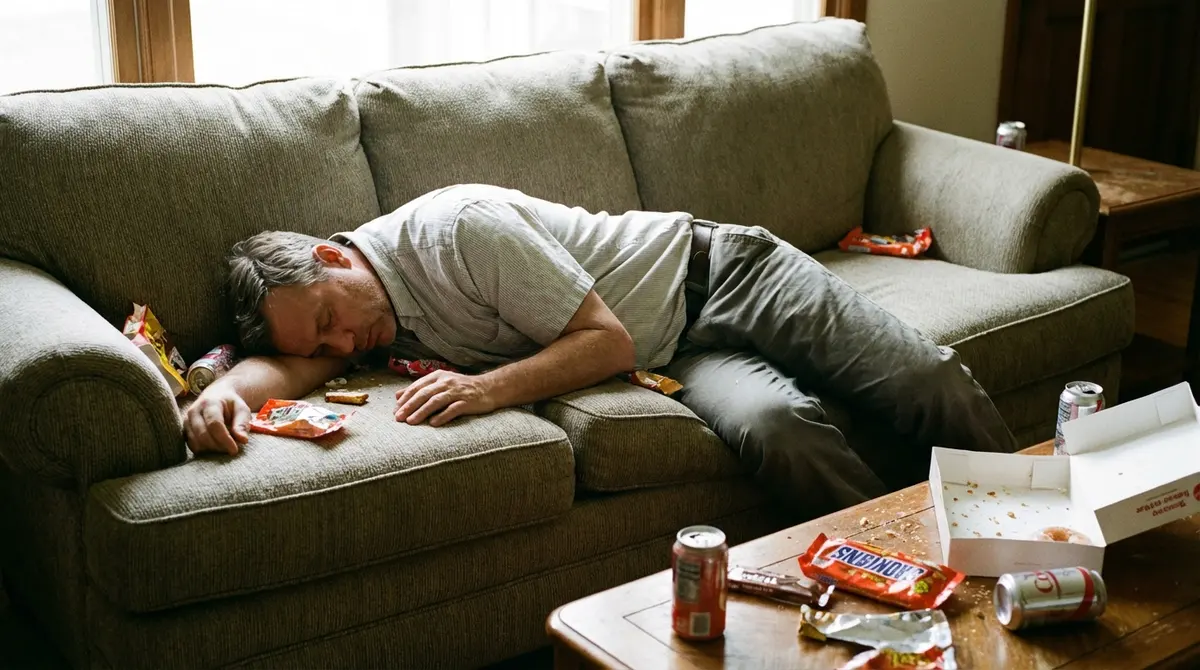
When you are exhausted, your brain looks for an immediate source of energy. Sugar is then the simplest and quickest solution for it. A sugary drink, a biscuit or a chocolate bar quickly raises your blood sugar. You feel a little boost, a sense of renewed concentration or good mood.
The problem is that this rise is followed by a drop. The body secretes insulin to bring blood sugar back down. If the response is too strong, blood sugar falls too far and too fast: this is reactive hypoglycaemia. Your brain once again finds itself short of energy and triggers another sugar craving. You then enter a cycle of sugar → energy spike → crash → fatigue → new craving.
Lack of sleep, ghrelin and leptin
The result: you are hungrier than usual and less easily satisfied. Your brain is more attracted to sugary and fatty foods, because they provide a lot of energy in a short time. Late nights, repeated night-time waking or poor-quality sleep therefore naturally increase your sugar cravings the next day.
Working on your sleep habits is therefore one of the first keys to reducing your sugar urges, even before talking about willpower.
Insulin and blood sugar imbalances: the hidden mechanism
What happens after a sugar spike
Every time you eat fast-release sugars (pastries, sugary drinks, white bread, industrial snacks), your blood sugar rises quickly. In response to this rise, the pancreas secretes insulin to move glucose into the cells.
If these spikes are repeated, the body can become less sensitive to insulin; it then needs to secrete more of it to achieve the same effect. This is known as insulin resistance. In the short term, this often results in large swings in blood sugar with a succession of highs and lows: the ideal breeding ground for sugar cravings.
- Eating a very sugary or highly refined food
- Blood sugar spike
- Strong insulin secretion
- Blood sugar falls too quickly
- Reactive hypoglycaemia: fatigue, irritability, possible trembling
- An urgent need to have more sugar
The more this cycle repeats itself, the more you reinforce your dependence on sugar and the harder it becomes to stabilise your energy throughout the day.
Magnesium or chromium deficiencies
Magnesium and chromium play a role in carbohydrate metabolism and in the cells' sensitivity to insulin. A lack of magnesium can worsen fatigue, stress and muscle tension, making you more vulnerable to sugar cravings. A chromium deficiency is sometimes associated with less effective blood sugar management. Without making any promises, rebalancing your diet and, if necessary, getting medical advice on possible supplementation can therefore help to calm your sugar urges.
Stress and cortisol: when the body switches to survival mode
Cortisol whets the appetite for sugar
Chronic stress raises cortisol, the so-called stress hormone. In survival mode, cortisol prepares your body for rapid action and releases more glucose into the blood. At the same time, it stimulates the appetite, with a preference for energy-dense foods such as sugar and fat.
This mechanism was useful when stress corresponded to a one-off danger. Today, with permanent professional or personal stress, it becomes a trap: intense or prolonged stress → sugar craving → eating sugary foods → temporary relief → fatigue → the return of stress and guilt.
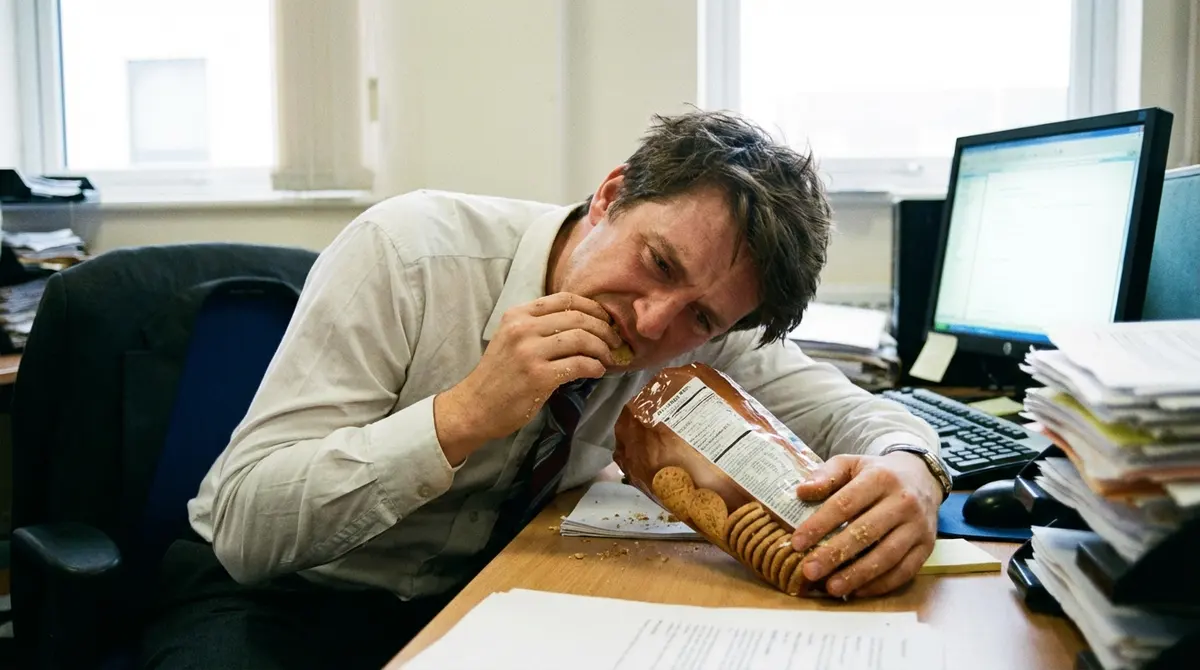
In addition, cortisol disrupts insulin sensitivity and contributes to blood sugar imbalances. It therefore combines with fatigue and lack of sleep to reinforce the causes of sugar cravings.
Dopamine and the brain's reward circuit
Sugar does not just feed your body, it also feeds your brain. With every sweet mouthful, your brain releases dopamine, a neurotransmitter linked to pleasure and reward. The more you use sugar as an automatic response to stress, boredom or fatigue, the more this circuit is reinforced. It is not a lack of willpower, but biological and emotional conditioning; the good news is that it can be changed.
How to break the fatigue-insulin-stress cycle
Acting on your lifestyle and what is on your plate
A few concrete ideas:
• Look after your sleep: a more regular bedtime, screens off before bed, a calm and dark environment.
• Stabilise your meals: avoid long periods without eating; favour protein, good fats and fibre to smooth out blood sugar.
• Limit fast-release sugars on their own: a sweet dessert just after a full meal has less impact than a sugary snack eaten on its own.
• Manage stress day to day: deep breathing, walking, meditation, gentle or moderate physical activity.
• Take your own background into account: if you have severe fatigue, mood disorders or a family history of diabetes, seek medical advice.
These adjustments lay the foundations. For some people, especially if their sugar urges are long-standing or closely linked to emotional stress, it can be useful to add complementary support to help the body and brain rebalance.
ABC Laser laser therapy: resetting the physiological counters
At ABC Laser, we offer a laser therapy approach that is in keeping with this idea of an overall reset of the mechanisms of dependence and stress management. It is not a medical procedure and this method in no way replaces treatment or follow-up by a healthcare professional.
The principle is to use a painless gentle laser on targeted areas of the body, often linked to the energy meridians and acupressure points. This stimulation aims to encourage deep relaxation, modulate certain reward circuits associated with addictive behaviours and support a better general balance, so that the body can more easily break out of repetitive patterns.
Where sugar cravings are concerned, this support can help to reduce the intensity of urges at the moment they arise, reduce the feeling of withdrawal and support your motivation as you adjust your diet and lifestyle.
It is still essential to remember that every person is different: laser therapy is no guarantee of results and does not replace medical care if it is needed.
Conclusion: better managing the causes of sugar cravings
Fatigue, insulin imbalances and chronic stress interact to disrupt your hunger signals, create reactive hypoglycaemia and reinforce food urges. Understanding these mechanisms allows you to move beyond guilt and see your sugar cravings as a reflection of an overall imbalance rather than a lack of willpower.
By working on sleep, diet and stress management and, if necessary, getting support from complementary approaches such as the laser therapy offered by ABC Laser, you can gradually reduce the intensity of your sugar cravings and regain a calmer relationship with sugar.

Mini FAQ on sugar cravings and laser therapy
Is it normal to crave sugar more in the evening?
Yes, many people experience more sugar cravings at the end of the day. Accumulated fatigue, the stress of the day and sometimes a dinner that is too light or eaten too late encourage cravings.
How can you tell real hunger from an emotional sugar craving?
Real hunger comes on gradually, applies to savoury as well as sweet foods and subsides after a balanced meal. An emotional sugar craving is often sudden, very focused on specific foods and can occur even after a meal.
How long does it take to reduce sugar urges after changing your habits?
It depends on your starting point. Some people feel an improvement within a few days; for others, especially in the case of chronic stress, several weeks are needed.
Does laser therapy make you lose weight or cure a metabolic disease?
No. Laser therapy does not constitute a medical procedure and does not treat metabolic diseases. Its role is to support your wellbeing approach by reducing certain sugar cravings and encouraging better stress management.
To find out more and discover our solutions, you can visit the ABC Laser website.