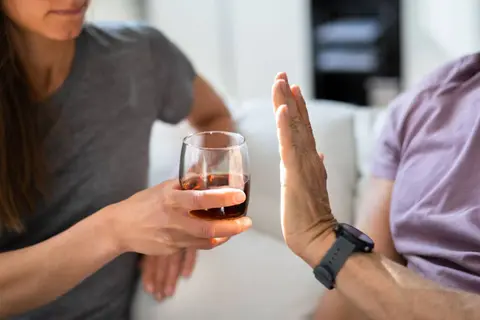
How to stop or cut down on alcohol? Methods and solutions for changing your drinking
How can you stop drinking alcohol or simply manage to drink less? The question may arise after a period of excessive drinking, several attempts to cut down, a desire to regain control or simply when alcohol starts to take up more space in everyday life.
You do not need to consider yourself dependent to ask yourself the question. Regular alcohol consumption, increasing quantities, difficulty sticking to the limits you had set yourself or an urge to drink that has become automatic can already prompt you to take stock.
Cutting down, stopping temporarily or aiming for lasting abstinence do not necessarily involve the same journey. The goal depends on your relationship with alcohol, your habits, your triggers, the possible existence of a physical or psychological dependence and your state of health.
This guide presents the main steps for understanding your drinking, preparing for change, learning about the different methods to stop drinking and discovering the role that certain complementary approaches can play.
Reading time: about 9 minutes
Contents
- How do you know if your alcohol consumption is becoming problematic?
- Should you cut down or stop drinking alcohol completely?
- How do you prepare to stop or cut down on alcohol?
- Can you stop drinking alcohol on your own?
- What are the symptoms of alcohol withdrawal?
- What methods exist to cut down or stop drinking alcohol?
- How do you manage the urge to drink and change your habits?
- Can the laser support an effort to cut down or stop?
- How do you maintain your goal over time?
- What should you do after a lapse or a return to drinking?
- What changes can you observe after cutting down or stopping alcohol?
- When and from whom should you ask for help?
- Frequently asked questions about cutting down and stopping alcohol
How do you know if your alcohol consumption is becoming problematic?
Problematic drinking is not defined solely by the number of drinks consumed. Frequency, quantities, circumstances and above all the place gradually taken up by alcohol are also important.
Certain signs may prompt you to ask yourself questions:
- drinking more often or more than before;
- regularly wanting alcohol at certain times of the day;
- finding it hard to stick to the planned amount;
- using alcohol to relax, sleep or manage an emotion;
- having already tried to cut down without maintaining the reduction;
- continuing to drink despite certain personal, family or professional consequences;
- feeling unwell or having symptoms when you are not drinking.
Regular drinking and loss of control: what is the difference?
Regular drinking does not automatically imply dependence. On the other hand, loss of control, an increasing need for alcohol or the appearance of withdrawal symptoms should draw attention.
Dependence can have a psychological, behavioural and, in certain situations, physical dimension. The latter is particularly important to identify before considering stopping abruptly.
Should you cut down or stop drinking alcohol completely?
Cutting down on your alcohol consumption may be a first goal for some people. Others wish to stop completely because they no longer manage to keep their drinking within their limits.
Drinking less
Reducing the number of drinking occasions, reducing quantities and introducing alcohol-free days make it possible in particular to break certain automatic behaviours and to observe your relationship with drinking.
Stopping temporarily
A period without alcohol can allow you to step back from established habits and identify the situations in which the urge most often appears.
Stopping for good
For some people, abstinence becomes the most appropriate goal, particularly when controlling quantities remains difficult or when a health professional recommends stopping.
Where there is alcohol dependence, the choice between cutting down and stopping should be considered with a health professional.
How do you prepare to stop or cut down on alcohol?
Deciding to drink less or to stop drinking is a first step. But drinking is often associated with specific habits that also need to change.
Understanding when and why you drink
Pre-dinner drinks, coming home from work, dinner, weekends, evenings with friends, stress or boredom: identifying the usual circumstances makes it possible to spot what really triggers drinking.
Identifying your triggers
A trigger can be a place, an emotion, a person, a time of day or simply a ritual repeated for several years.
Once identified, it becomes easier to plan a different response: changing your environment, preparing another drink, walking, doing an activity or changing how the moment in question is organised.
Gradually changing your habits
The aim is not only to remove alcohol. It is also about building new automatic behaviours capable of replacing those that were associated with it.
Can you stop drinking alcohol on your own?
Some people manage to cut down or stop drinking on their own. But this depends greatly on the level of consumption and the possible existence of a physical dependence.
When the body has adapted to heavy and regular drinking, stopping abruptly can cause an alcohol withdrawal syndrome.
Warning: in the event of heavy daily drinking, tremors, sweating, agitation, palpitations or a history of difficult withdrawal, seek medical advice before stopping alcohol abruptly.
To find out more about this situation, see our guide: stopping alcohol on your own: when and how to get help?
What are the symptoms of alcohol withdrawal?
The symptoms of alcohol withdrawal mainly concern people in whom a physical dependence has set in.
They may include in particular:
- tremors;
- sweating;
- anxiety or agitation;
- irritability;
- palpitations;
- nausea or digestive problems;
- sleep problems.
In certain situations, withdrawal can lead to serious complications, notably seizures or delirium tremens. Medical care is then essential.
Alcohol withdrawal should therefore never be taken lightly when a physical dependence is known or suspected.
What methods exist to cut down or stop drinking alcohol?
There is no single universal method to stop drinking. Several solutions can be used alone or in combination depending on the situation.
Medical and addiction support
Your GP can be a first point of contact. Professionals specialising in addiction medicine and CSAPAs can also assess your drinking and offer appropriate support.
Psychological and behavioural support
Understanding the emotions, habits and situations associated with alcohol makes it possible to work on the mechanisms that sustain drinking and to develop new strategies.
Medication-based treatments where indicated
Medication may be offered in certain situations for withdrawal, reducing consumption or maintaining abstinence. Their indication and prescription are a matter for a health professional.
Mutual support groups and organisations
Associations, mutual support groups and specialised organisations can provide a listening ear, collective experience and long-term support.
Complementary non-medication approaches
Physical activity, relaxation, changes in habits and certain complementary practices can also form part of a holistic approach.
You can find out more about this subject in our article on aids for natural alcohol withdrawal and non-medication approaches.
How do you manage the urge to drink and change your habits?
The urge to drink may persist even after deciding to cut down or stop. It can be triggered by stress, a social situation, an emotion or simply the time at which the old ritual used to begin.
A few strategies can be prepared:
- not keeping alcohol unnecessarily within reach;
- planning an alternative drink you enjoy;
- temporarily changing certain social habits;
- filling the moment associated with drinking differently;
- doing an activity when the urge appears;
- contacting someone you trust at difficult moments.
Stress and social situations are sometimes important triggers. Our article on anxiety without alcohol and social stress deals specifically with this question.
Can the laser support an effort to cut down or stop drinking alcohol?
When someone is looking for solutions to stop drinking, they may come across complementary approaches such as laser auricular stimulation.
This practice is searched for in particular under the expressions laser to stop drinking alcohol, anti-alcohol laser, laser alcohol withdrawal or laser auriculotherapy.
How does laser auricular stimulation work?
The method consists of locating different zones of the outer ear and then stimulating certain selected points with a low-intensity laser, without needles and without injections.
It falls within the field of auricular reflexology and practices inspired by auriculotherapy.
At ABC LASER®, the location of the points and the protocol are adapted to the person's profile. The discussion also makes it possible to identify habits, the moments associated with drinking and certain triggers in order to personalise the support.
What role should the laser play in a holistic approach?
Laser auricular stimulation is not a medical treatment for alcohol withdrawal. The available scientific data do not allow it to be presented as a validated treatment for alcohol dependence, nor as a method capable of managing a physical dependence.
It can be considered as complementary, non-medical support for a person committed to cutting down or stopping.
To find out more about the method, see our feature on laser alcohol withdrawal and auricular stimulation.
If your question is more about feedback from experience, also see our page laser to stop drinking alcohol: reviews and testimonials.
How do you maintain your goal over time?
Change does not end with the first few days without alcohol. Once the decision has been made, you have to gradually learn to get through the situations previously associated with drinking.
Maintaining your goal involves in particular identifying risky situations, creating new rituals and being able to anticipate more difficult periods.
The aim is to no longer depend solely on the motivation of the first day, but to gradually build a daily life compatible with the chosen goal.
What should you do after a lapse or a return to drinking?
One drink or a one-off return to drinking does not necessarily mean that all the work done has been lost.
The important thing is to quickly identify what triggered this drinking: social context, stress, fatigue, an emotional event, an old habit or a particularly strong urge.
Understanding the trigger makes it possible to prepare a different response if the same situation arises again.
When lapses become frequent, significant or difficult to control, it is better to seek help from a health professional or a specialised organisation.
What changes can you observe after cutting down or stopping alcohol?
The effects of cutting down or stopping vary according to previous consumption, state of health, diet, sleep and many individual factors.
Over time, some people may notice changes in particular in their sleep, digestion, energy, concentration or weight.
The liver is one of the most searched-for subjects after stopping. Its capacity to recover depends, however, on its initial condition and on the possible existence of liver damage.
We have therefore devoted a specific guide to this question: the liver and stopping alcohol: how fast does it regenerate?
Important: the improvements observed after cutting down or stopping are linked to reduced exposure to alcohol. They should not be attributed to the laser stimulation.
When and from whom should you ask for help?
You do not need to wait for an extreme situation to seek support.
Professional advice is particularly important when a person:
- can no longer control the amounts they drink;
- feels a need for alcohol that is difficult to control;
- drinks heavily every day;
- has symptoms when not drinking;
- has already experienced difficult withdrawal;
- notices physical, psychological, family or professional consequences;
- makes repeated attempts to cut down or stop, followed by significant relapses.
A GP, an addiction specialist and CSAPAs can help assess the situation and determine the appropriate support.
A complementary approach can then find its place in this process when the situation allows, without replacing the medical care of a dependence or a withdrawal syndrome.
Frequently asked questions about cutting down and stopping alcohol
What is the best method to stop drinking alcohol?
There is no method that suits everyone. The choice depends on consumption, the possible presence of a dependence, state of health, triggers and the desired goal.
Can you stop drinking overnight?
It depends on the level of consumption and the existence of a physical dependence. In some people, stopping abruptly can cause a potentially serious withdrawal syndrome. Medical advice is necessary if in doubt.
How can you cut down on your alcohol consumption?
Identifying drinking situations, setting precise limits, introducing alcohol-free days and changing the associated rituals can be first steps. If difficulties persist, it is helpful to seek support.
How long does alcohol withdrawal last?
The duration and intensity vary from person to person. Physical withdrawal and the longer-term work on habits, cravings and triggers also correspond to two different periods.
How can you calm an urge to drink?
Changing context, keeping busy, preparing an alternative drink, contacting someone you trust or temporarily moving away from the trigger can help. Very strong urges, or urges associated with signs of withdrawal, require appropriate support.
Can you stop drinking alcohol without medication?
Yes in some situations, but not systematically. A physical dependence may require medical care and possibly medication. This decision is for the health professional.
Can the laser help you stop drinking alcohol?
Laser auricular stimulation is offered as a complementary, non-medical approach. It can form part of a personal process of change, but it is not a validated medical treatment for alcohol dependence and no result can be guaranteed.
What should you do if you start drinking again?
It is helpful to identify the trigger and react quickly rather than considering the goal as definitively lost. In the event of loss of control or repeated relapses, professional support is recommended.
Would you like support in your effort to cut down or stop?
ABC LASER® offers complementary, non-medical support combining laser auricular stimulation, personalised location of points and discussion of habits and triggering situations.
Each session is adapted to your goal and your relationship with drinking, in a confidential, non-judgemental setting.
→ Discover ABC LASER® support for cutting down or stopping alcohol
Important information: the laser auricular stimulation offered by ABC LASER® is complementary wellbeing support. It does not replace a diagnosis, a treatment or medical follow-up. In the event of heavy or daily drinking, known or suspected dependence, withdrawal symptoms or a history of difficult withdrawal, seek medical advice before stopping abruptly.