Updated: 17 October 2026 | Reading time: about 7 min | Written by: ABC Laser® Strasbourg
Emotional snacking • Stress • Sugar cravings • Auricular laser
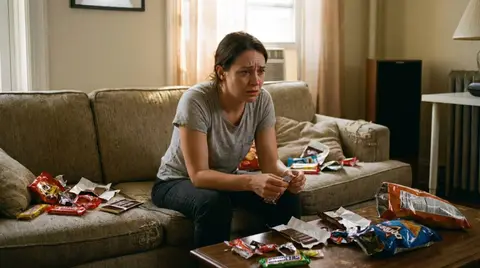
Do you sometimes eat without being hungry? Does a stressful day, an annoyance or a moment of tiredness trigger a craving for chocolate, biscuits or other comfort foods? This behaviour often has a name: emotional snacking.
Unlike physical hunger, this craving sometimes appears suddenly and seems hard to ignore. It can become a habit, particularly when food is regularly used to cope with stress, boredom or certain emotions.
Why do we eat under the influence of emotions? How can you recognise the triggers and what solutions can you adopt? Discover the mechanisms of emotional snacking, practical tips for better managing food cravings and the role that complementary support through auricular laser stimulation in Strasbourg can play.
Contents
- Understanding emotional snacking
- Stress, sugar and the brain
- Recognising emotional hunger
- Solutions for limiting cravings
- What role for auricular laser?
- ABC Laser® Strasbourg support
- Frequently asked questions
- Taking the first step
Emotional snacking: why do we feel the need to eat without really being hungry?
Emotional snacking is food intake influenced more by an emotion or a situation than by an immediate physiological need. It can appear after a busy day, during a stressful period or when looking for a moment of comfort.
This behaviour does not necessarily set in overnight. It can build up gradually, when the same food response is repeated in certain situations.
What are the most common triggers?
Several circumstances can encourage emotional snacking:
- Work or family stress and mental load.
- Tiredness, lack of sleep or irregular days.
- Boredom, loneliness or the need for distraction.
- Annoyances, frustration or certain unpleasant emotions.
- Established habits, such as snacking in front of a screen.
- Excessive food restrictions, which can intensify cravings.
The aim is not to suppress emotions, but to learn to recognise the moments when they influence our food choices.
Stress, cortisol and sugar cravings: what happens in the brain during an urge to snack?
Stress can influence appetite and eating behaviour. In some people, it temporarily reduces hunger; in others, it encourages cravings for particularly enjoyed foods, especially sweet or energy-rich ones.
What role does cortisol play in food cravings?
Cortisol is a hormone involved in the stress response. The way it works is complex and varies according to the person, the duration of the stress, sleep and other factors.
When a difficult period goes on, some people notice more food cravings, while others lose their appetite. There is therefore no identical reaction for everyone.
Why do chocolate or biscuits sometimes bring comfort?
Foods we enjoy can activate brain mechanisms associated with pleasure and reward. Their taste, texture, availability and the memories they are associated with also contribute to their appeal.
An association can then form: after an annoyance, eating becomes a familiar response. It is not necessarily a need for energy, but sometimes a comfort habit.
Dopamine plays a part in the mechanisms of motivation and reward, but emotional snacking cannot be reduced to a simple rise or fall in dopamine, serotonin or blood sugar.
Physical hunger or emotional hunger: how can you tell the difference before snacking?
It is not always easy to distinguish real hunger from a craving triggered by an emotion. Some clues can, however, help you better understand what you are feeling.
| Physical hunger | Emotional craving |
|---|---|
| Often appears gradually. | Can arise suddenly. |
| Different foods may be suitable. | Craving sometimes very specific: chocolate, biscuits, crisps... |
| May be accompanied by physical sensations of hunger. | May appear after an emotion or an annoyance. |
| Satiety helps bring the meal to an end. | The craving may persist despite a feeling of satiety. |
These differences are guidelines, not absolute rules. Physical hunger and emotions can also be present at the same time.
Three simple questions to ask yourself before eating
- Am I really hungry? How long ago did I eat?
- What am I feeling right now? Stress, tiredness, boredom or annoyance?
- What do I need now? A meal, a break, rest or comfort?
This observation can help you step back without judging yourself. It must not become an obligation to resist hunger or to deprive yourself.
What solutions can you adopt to limit emotional snacking and sugar cravings in daily life?
There is no single solution to emotional snacking. Several habits can nevertheless help you better identify cravings and reduce automatic eating.
Identify the moments when cravings appear
For a few days, observe the circumstances in which you snack: time of day, emotion felt, level of tiredness or particular situation. There is no need to count every calorie.
Pause before responding to an automatic craving
When you identify a craving linked to stress rather than hunger, a short pause can allow you to choose what you really need. Breathing calmly, walking for a few minutes or changing activity are possibilities.
If you are hungry, eating remains an appropriate response. The aim is not to systematically put off meals.
Keep a suitable eating rhythm
Sufficiently nourishing and regular meals can limit some situations of intense hunger. Excessive restrictions and skipped meals can, on the contrary, make managing cravings more difficult.
Take sleep and mental load into account
Lack of sleep and periods of stress can influence appetite and eating habits. Gradually improving your rest pattern and finding ways to manage tension can be useful.
Avoid guilt and excessive bans
Eating a treat does not mean you have failed. A lasting approach relies more on understanding your habits than on a succession of bans and compensations.
If episodes become frequent, are accompanied by a loss of control or cause significant distress, a health professional can offer a suitable assessment.
Auricular laser and emotional snacking: what role for this complementary approach in Strasbourg?
Some people who wish to change their eating habits are interested in complementary approaches, in particular auricular laser stimulation, sometimes called ear laser or laser auriculotherapy.
At ABC Laser® Strasbourg, this wellbeing service is based on targeted stimulation of areas of the outer ear, using a low-intensity laser. The protocol is inspired by auricular reflexology.
Can laser eliminate sugar cravings caused by stress?
The available scientific data do not make it possible to claim that auricular laser eliminates sugar urges, durably modifies the brain’s reward circuits or regulates the hormones responsible for appetite.
This technique should therefore not be considered a proven treatment for emotional snacking. It can be seen as a complementary wellbeing service, within a broader approach to changing habits.
Why combine support with new habits?
Understanding your emotional triggers, respecting your nutritional needs and looking for strategies suited to stress remain essential. Laser replaces neither these steps nor medical or psychological follow-up when it is necessary.
To find out more: see our page Managing appetite, cravings and weight: ABC Laser® Strasbourg support.
How does ABC Laser® Strasbourg support for snacking habits work?
The support begins with a conversation about your eating habits, the times when cravings occur and the goals you wish to pursue.
The practitioner then locates the auricular areas set out in his protocol, before carrying out the appropriate stimulation and applying the low-intensity laser. This approach is non-invasive and generally painless.
Which package should you choose for sugar cravings or emotional snacking?
The Formule Équilibre offers personalised support for people wishing to work on their eating habits. It includes two sessions, according to the terms of the service.
Discover the Formule Équilibre: how it works, price and terms.
If your difficulty mainly concerns chocolate, biscuits or desserts, you can also see our page Stop Sugar laser: sugar cravings and food urges.
Frequently asked questions about emotional snacking, stress and auricular laser
Why do I want to eat when I am not hungry?
A food craving can be triggered by an emotion, a habit, tiredness or a particularly enjoyed food. It does not always correspond to an immediate physiological need.
Does emotional snacking only involve sugar?
No. Cravings can involve chocolate, biscuits and pastries, but also crisps, cheese or other savoury foods.
Is emotional snacking an addiction?
Not necessarily. Emotional snacking describes eating behaviour influenced by emotions. It does not, on its own, constitute a diagnosis of addiction or of an eating disorder.
Can auricular laser put an end to compulsive eating?
No. Its effectiveness on compulsive eating has not been demonstrated. In case of repeated loss of control or distress, specialised support is recommended.
How many sessions does the Formule Équilibre include?
ABC Laser®’s Formule Équilibre includes two sessions, according to the terms set out on the dedicated page.
Can I see a psychologist or a dietitian at the same time?
Yes. Psychological, medical or nutritional follow-up can be particularly useful when emotions strongly influence eating. The ABC Laser® service does not replace this support.
What if you started to better understand your snacking cravings?
Would you like to take a step back from your eating habits and discover our wellbeing approach? ABC Laser® Strasbourg welcomes you to present its personalised support.
ABC Laser® Strasbourg
9 rue Albert Calmette, 67200 Strasbourg
Near the Hautepierre hospital
Discover the Formule Équilibre
Complementary, non-medical support, with no promise of results. If you have an eating disorder, consult a health professional.