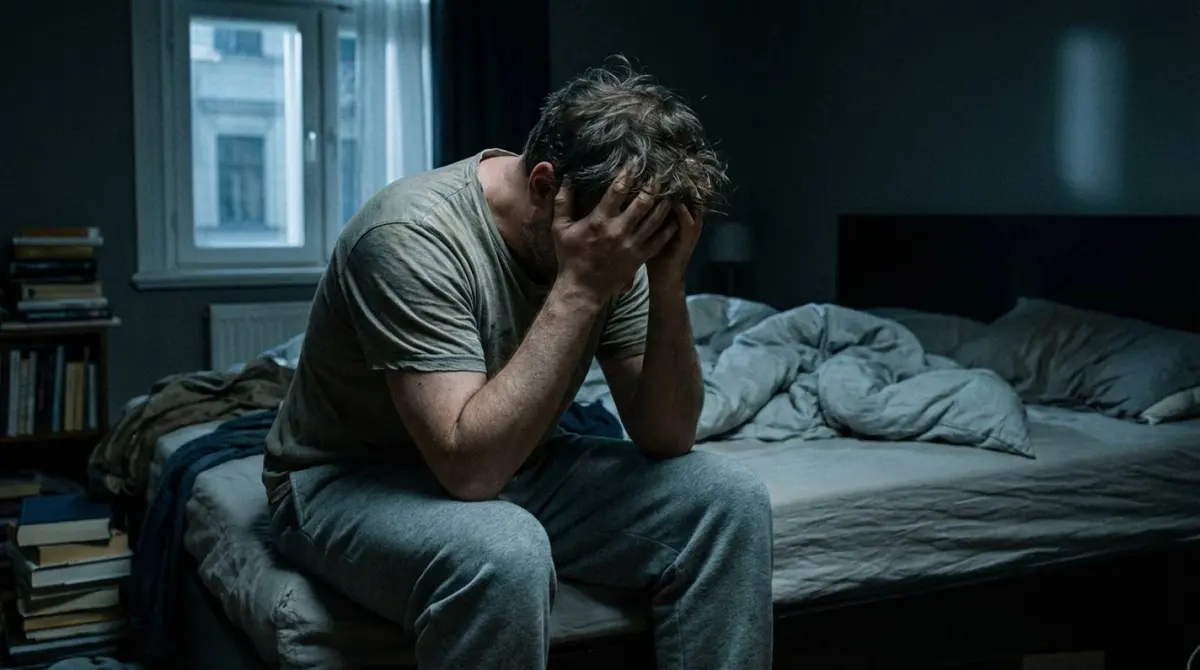
Stopping alcohol is a courageous decision, but many people come up against the same obstacle just after they stop drinking: during alcohol withdrawal, sleep suffers, nights become restless, sleep is light and you wake up often. You are exhausted when you thought you would actually sleep better without alcohol; this gap between your expectations and reality can be confusing, even discouraging.
Yet these sleep problems are common during withdrawal and eventually improve over time. In this sensitive period of alcohol withdrawal and sleep, laser can become a valuable ally to ease anxiety, reduce cravings for alcohol and help your body regain more stable sleep cycles, in particular through suitable laser support for alcohol withdrawal.
Alcohol withdrawal and sleep: regaining restorative sleep after stopping alcohol with laser
Reading time: ~11 min
- Alcohol withdrawal and sleep: what happens when you stop
- The steps to getting good sleep back after stopping alcohol
- How laser can help during withdrawal
- Dos and don’ts for sleeping better during withdrawal
- Comprehensive support to secure your efforts
- Mini FAQ
Alcohol withdrawal and sleep: what happens when you stop
For a long time, alcohol may have seemed to help you fall asleep faster. In reality, it acts as a false friend: a sedative effect at the start of the night, but a deep disruption of sleep architecture afterwards.
Studies show that it fragments sleep, increases micro-awakenings, reduces the proportion of REM sleep and promotes certain disorders such as sleep apnoea. The larger the quantities, the more chaotic the end of the night becomes.
When you stop drinking, the brain has to readapt; it no longer receives the artificial sedation of alcohol and has to relearn how to naturally produce its own calming substances. This reorganisation takes a few weeks: an almost inevitable period of turbulence.
The steps to getting good sleep back after stopping alcohol
During the first few days, insomnia, restlessness, nightmares, night sweats and intense fatigue are common. Anxiety often rises at the same time and keeps these difficulties going.
After about a week of abstinence, REM sleep starts to normalise; you feel a little more rested, your mood improves and your attention stabilises.
About a month after withdrawal, the internal biological rhythms (cortisol cycle, body temperature) resynchronise, a key condition for deeper, more continuous sleep.

Why sleep problems increase the risk of relapse
More than 90% of people being followed for withdrawal report sleep problems, and more than half still have them beyond the acute phase. Insomnia and chronic fatigue fuel anxiety and discouragement; the temptation to “have another drink to sleep” then becomes strong, tripling or quadrupling the risk of relapse. Protecting sleep is therefore a priority.
How laser can help during withdrawal
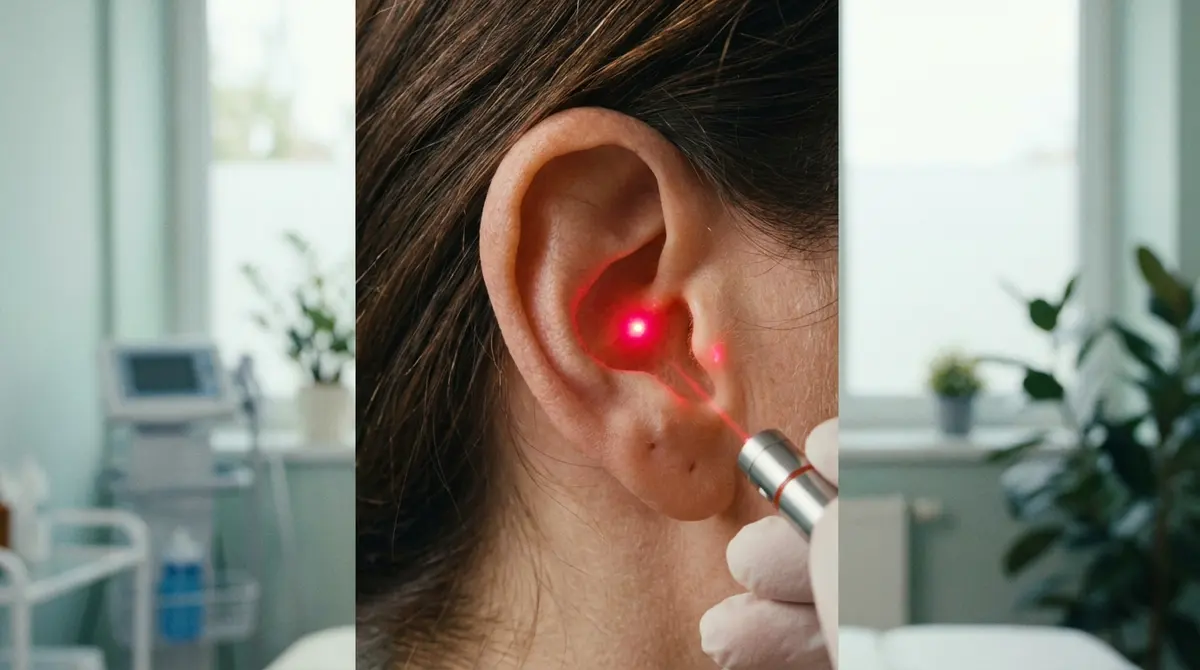
Laser auriculotherapy painlessly stimulates specific points on the ear (and sometimes on the face, hands or wrists) using a low-intensity laser. The aim: to activate reflex areas that modulate the nervous system and the release of endorphins, natural substances with calming effects.
Effects of laser on sleep and anxiety
- Reduced anxiety and nervousness, making it easier to fall asleep;
- Reduction in sudden cravings for alcohol;
- Overall easing of withdrawal symptoms: stress, irritability, restlessness.
How a typical laser session works
A session lasts 30 to 60 minutes. After an initial discussion, the practitioner targets the points to stimulate (anxiety, sleep, withdrawal). You are comfortably settled; the beam is applied to the chosen points without any pain. The risks of side effects are minimal. The number of sessions varies from person to person.
ABC Laser’s services fall within wellbeing, do not constitute a medical procedure and do not replace follow-up by a health professional.
Dos and don’ts for sleeping better during withdrawal
Comprehensive support to secure your efforts
Laser treatment is valuable support, but it is part of an overall approach: medical follow-up (prevention of withdrawal syndrome), psychological or addiction support, sleep hygiene advice. Laser reduces anxiety and withdrawal symptoms, making it easier to establish new sleep habits and reducing the temptation of alcohol.
At ABC Laser, the aim is to complement the work of health professionals by improving your wellbeing during this key stage. For any questions, contact us.

FAQ on alcohol withdrawal and sleep & laser
How long does it take for sleep to improve?
This varies considerably from person to person; REM sleep improves after one week on average, with full resynchronisation of biological rhythms over several weeks.
Are sleep problems after withdrawal dangerous?
Not directly dangerous, but they significantly increase the risk of relapse; it is therefore essential to take them seriously.
Is laser enough to stop alcohol and sleep better?
It depends on the situation.
In some cases, particularly with so-called social drinking (occasional, social consumption, without established dependence), laser may be enough as a boost to take back control or stop drinking and improve sleep.
On the other hand, in cases of severe dependence, a deeply ingrained habit or emotional difficulties linked to alcohol, laser can be complementary. It does not replace medical follow-up or psychological support.
The ideal is therefore to assess the situation individually and to integrate laser, if necessary, into a broader approach.
Is laser treatment compatible with my medication?
Yes: it is an external, non-medication tool, with no known interactions. Nevertheless, talk to your doctor about it if you are already undergoing treatment.
Going through withdrawal puts the body under severe strain, but this period can become a transition towards healthier sleep. With suitable medical follow-up and complementary solutions such as laser, you increase your chances of getting back to restorative nights and maintaining your abstinence. To go further, discover the solutions offered by the ABC Laser centre located in Strasbourg.